Looking for simple EYFS activities to try at home? You don’t need a classroom, special equipment, or a teaching background — just a willingness to get a bit hands-on.
As both a mum and a primary school teacher, I’ve put together five easy EYFS activities for ages 3-5 that build real early years skills — counting, measuring, problem-solving, literacy, and creativity — while feeling like genuine fun rather than “school at home.”
Whether you’re at home, in the garden, or out at the park, these activities are simple, low-cost, and designed to make learning feel natural and playful rather than like a lesson.
What you’ll find in this post
- 5 hands-on activities spanning maths, literacy, science, art and movement
- The specific EYFS skills each activity builds
- Simple variations for home, garden, or outdoor spaces
- Links to more detailed guides for each activity area
Why hands-on early years activities matter
Hands-on play isn’t a break from learning — for children aged 3-5, it’s the most effective way to learn. Manipulating real objects, moving their bodies, and exploring at their own pace builds understanding far more deeply than worksheets or screens ever could.
Through hands-on play, children naturally develop:
Early maths: counting, measuring, comparing
Literacy: vocabulary, sequencing, comprehension
Science: observation, prediction, curiosity
Physical skills: coordination, fine and gross motor control
5 activities to try
Hands-on early years learning activities
Pick one to start with today — you don’t need to do them all at once.
1
Activity one
Outdoor maths adventures
Maths is everywhere. Using sticks, stones, leaves, or even tree trunks, children can practise counting, measuring, comparing, and recognising shapes — making outdoor maths activities practical, hands-on, and genuinely fun.
Skills gained: counting, measuring, comparing, shape recognition, problem-solving
- Line up sticks or leaves from shortest to longest
- Set a counting obstacle course — jump, hop, or skip a set number of steps
- Go on a shape hunt and spot triangles, circles, or rectangles in nature
Want more ideas like this? See our full guide: 5 Fun Outdoor Maths Activities for Early Years.
2
Activity two
Storytelling and literacy games
Early literacy can be playful too. Reading and storytelling help children build vocabulary, imagination, and comprehension skills, weaving early years literacy learning into everyday moments rather than formal reading time.
Skills gained: vocabulary, comprehension, sequencing, creativity
- Make story stones: paint or draw pictures on stones and invent a story together
- Go on an alphabet scavenger hunt, spotting letters in books or around the house
- Act out a favourite story together, encouraging your child to sequence the events
Building communication skills early also supports speech development — see our guide: Toddler Language Development: 5 Things Every Parent Should Know.
3
Activity three
Nature science experiments
Exploring the natural world builds curiosity, observation skills, and early scientific thinking. These simple experiments turn an ordinary walk or garden visit into genuine hands-on science learning for preschoolers.
Skills gained: observation, prediction, measurement, curiosity
- Plant a mini garden and track growth and changes over time
- Try sink or float: test leaves, stones, and twigs in a bowl of water
- Keep a simple weather journal, recording sunny, rainy, or windy days
For more outdoor exploration ideas that need no planting or gardening skill, see: Garden Activities for Kids: 5 Easy Ideas for Learning Through Play.
4
Activity four
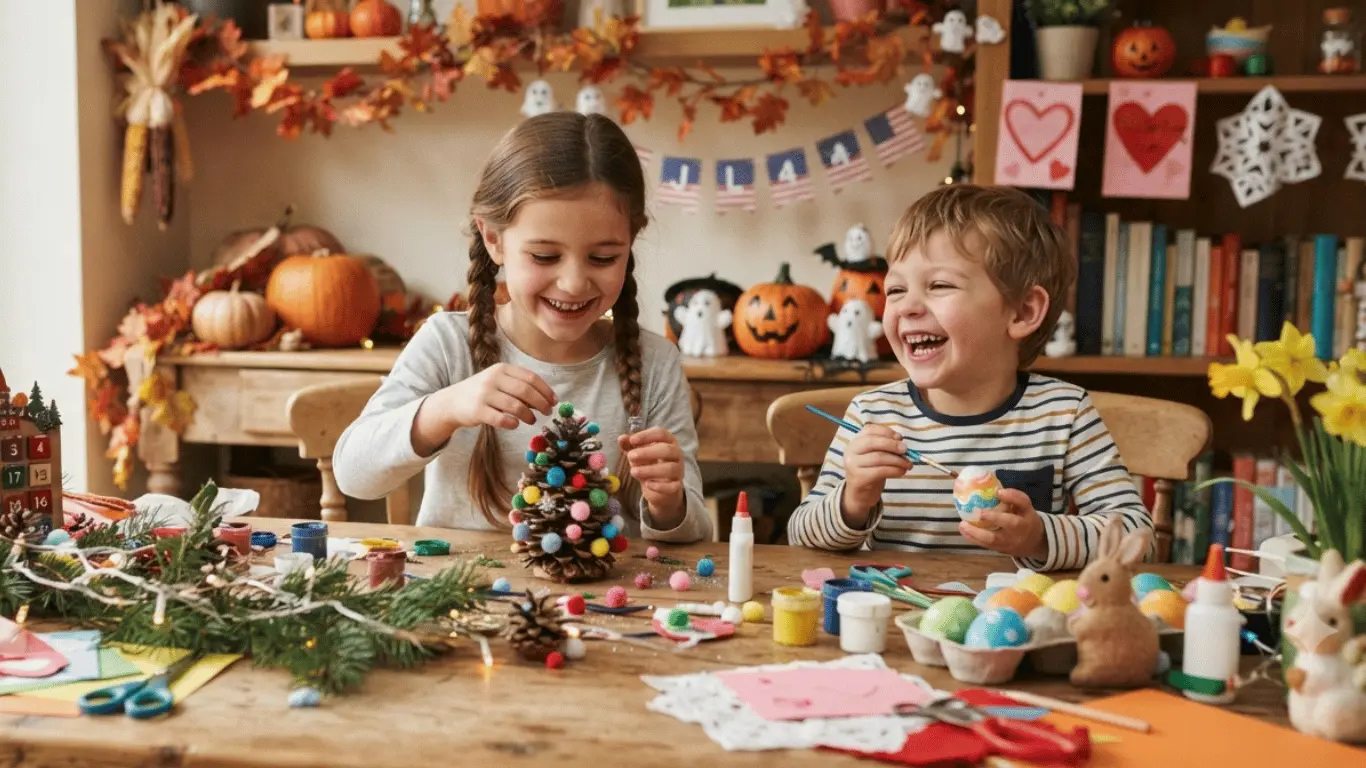
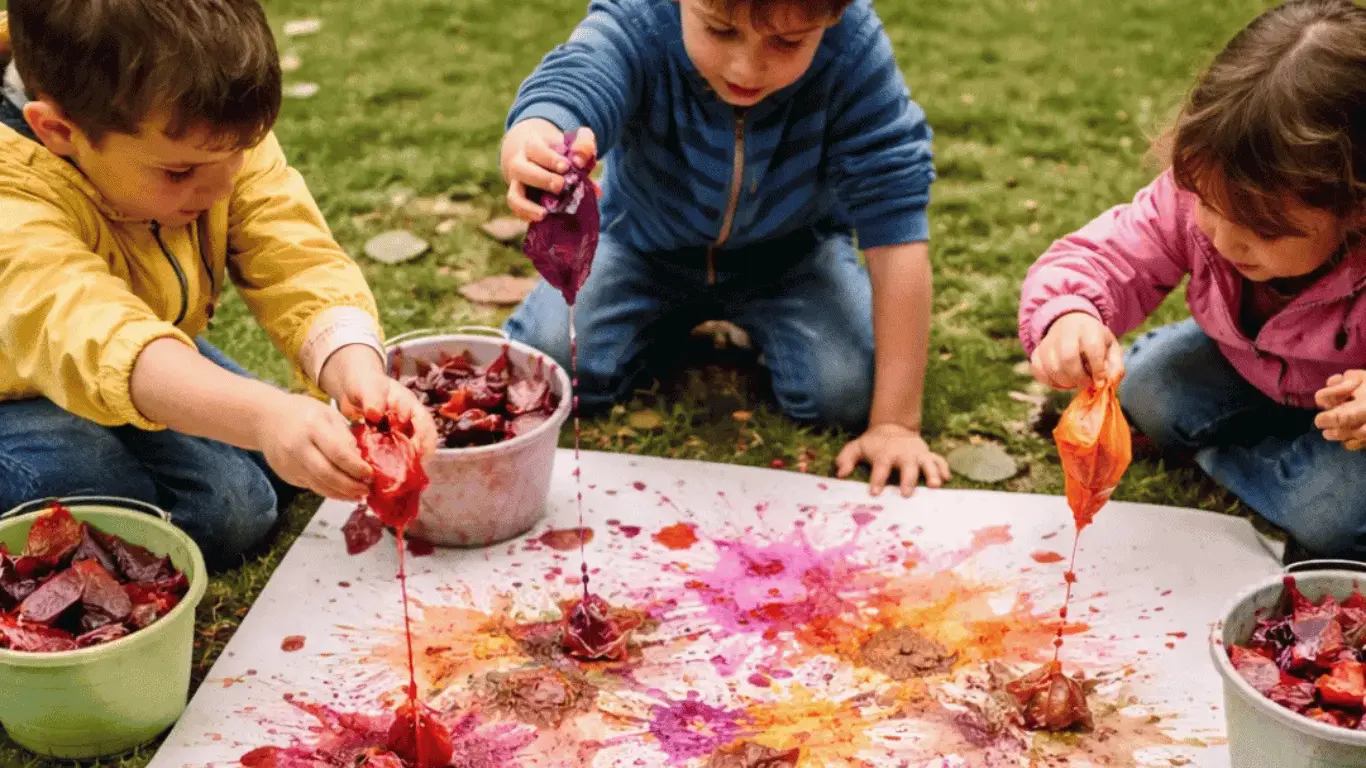
Creative arts and craft
Hands-on art allows children to express themselves, develop fine motor skills, and explore patterns, colours, and textures. These activities pair naturally with early years maths and literacy skills, reinforcing learning across the board.
Skills gained: creativity, fine motor skills, colour recognition, pattern making
- Make nature collages using leaves, flowers, and twigs
- Practise chalk drawing outdoors — letters, numbers, and shapes on the pavement
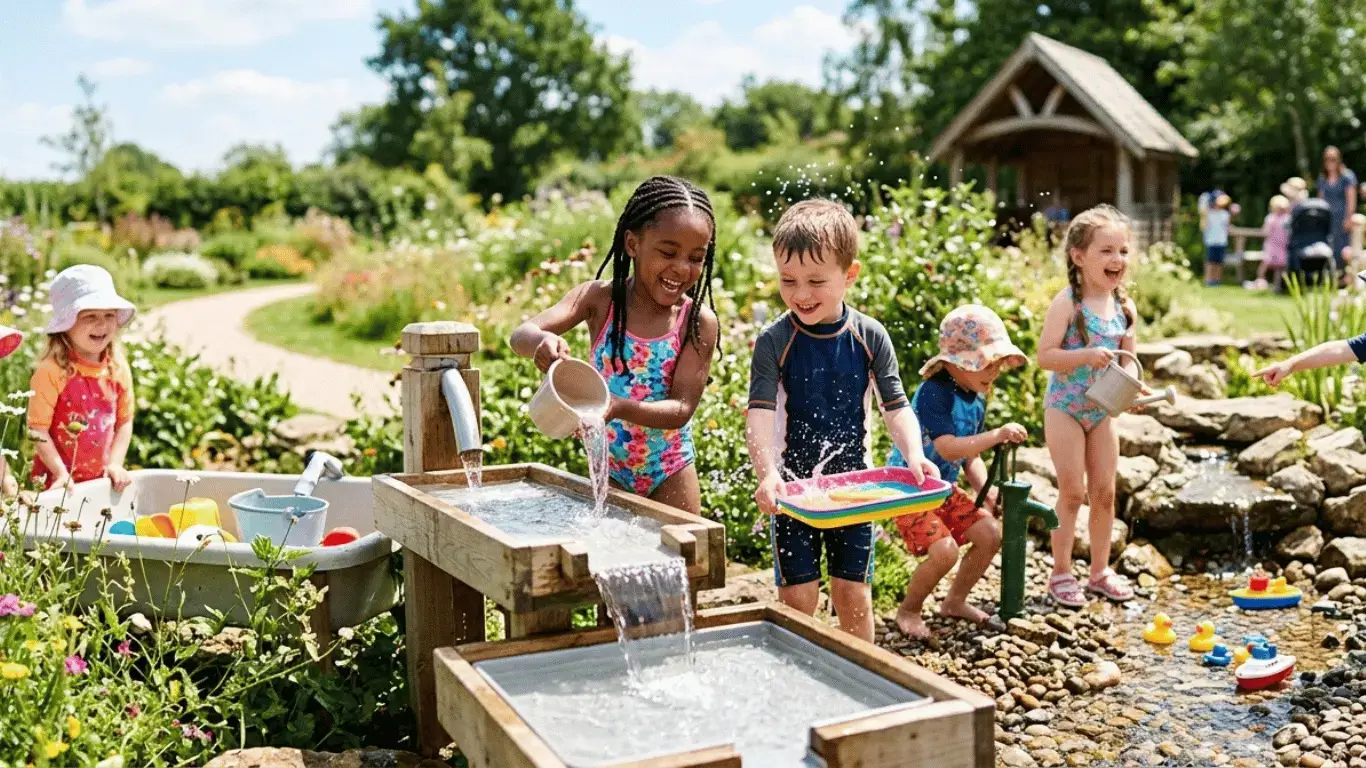
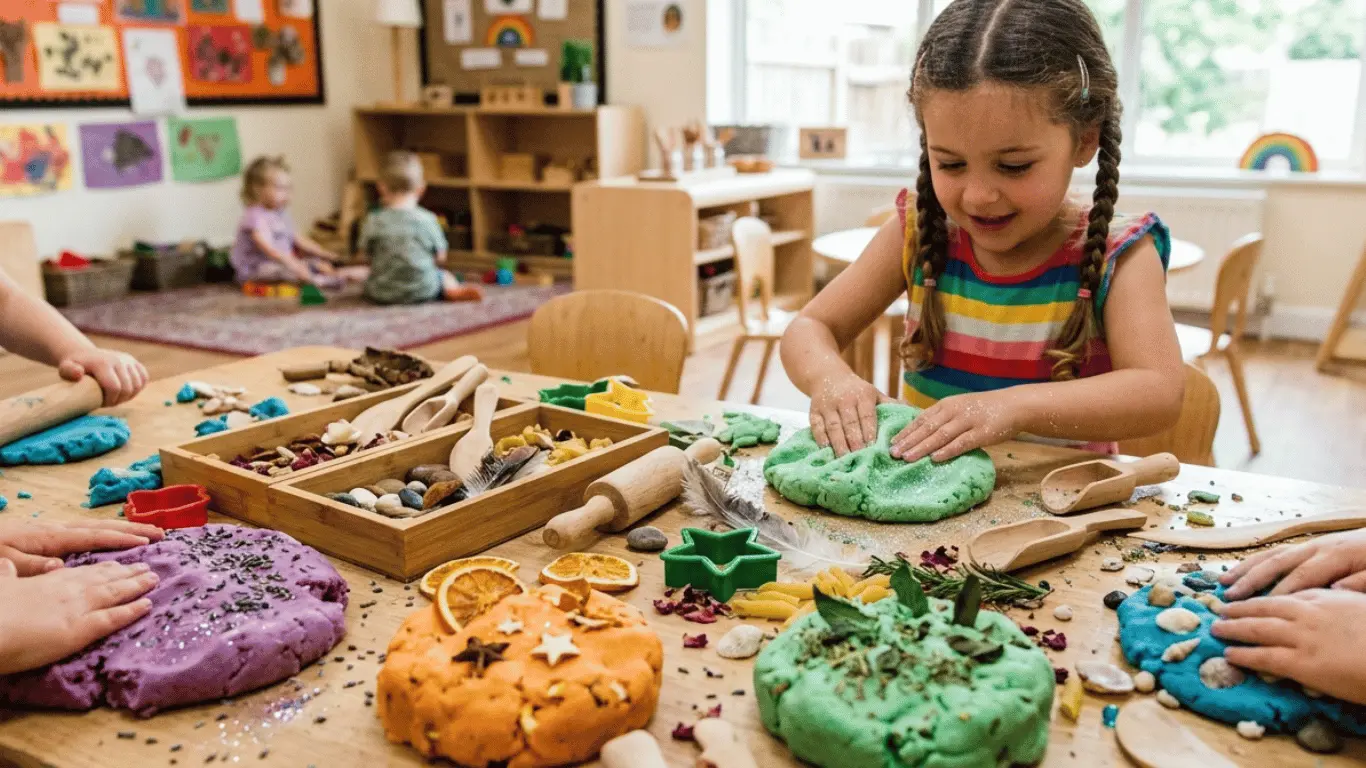
- Set up simple sensory play with playdough, sand, or water to explore texture and shape
5
Activity five
Active learning games
Children learn best when they’re moving. Active games combine physical activity with counting, problem-solving, and teamwork — reinforcing EYFS learning outcomes while burning some of that endless energy.
Skills gained: gross motor skills, counting, sequencing, teamwork, coordination
- Run counting relay races — hop, jump, or skip a number of times and compare totals
- Set a nature treasure hunt: find 5 leaves, 3 sticks, or 2 pinecones
- Play pattern movement games — clap, jump, or spin in sequences
Looking for more screen-free outdoor play ideas? See: Garden Activities for Kids: 5 Easy Ideas for Learning Through Play.
Early years learning can be simple, joyful, and hands-on.
By weaving in outdoor maths, storytelling, nature experiments, creative arts, and active games, you’re already giving your child everything they need to explore, play, and develop essential skills.
The goal isn’t perfection — it’s curiosity, exploration, and making learning feel meaningful and fun. Whether you’re indoors or outside, these five activities will keep your child engaged and excited about learning.
Explore the full activity series
Each guide below goes deeper into one area of early years learning — pick whichever is most useful for you right now.
Common questions about early years learning activities
Written by a mum & primary school teacher
I write about the practical, hands-on side of early years learning — the kind that fits into a real, busy family life.