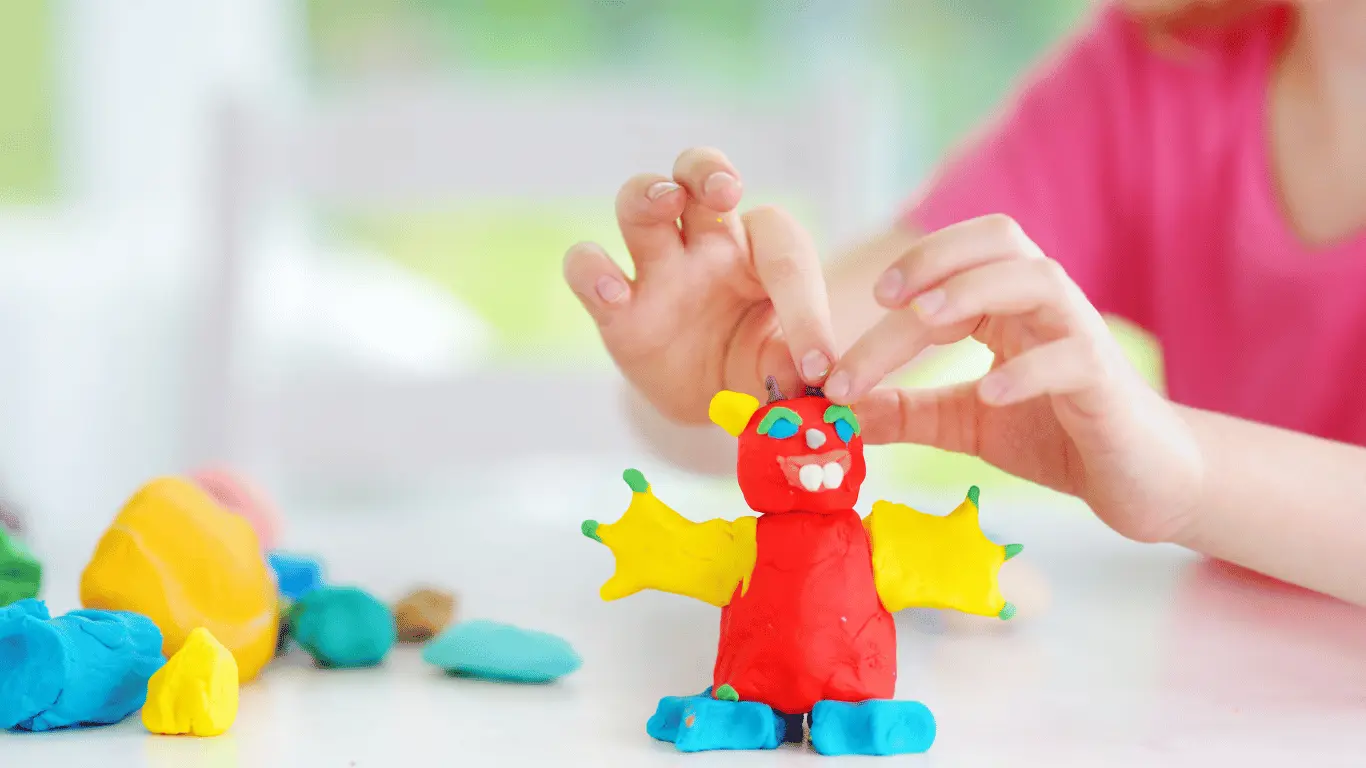
If you have ever watched a child happily squishing, rolling, and squeezing dough for twenty minutes straight, you already know how effective sensory dough ideas for EYFS learning can be — even when the activity looks like pure play.
As an Early Years teacher and mum, I have used sensory dough play extensively in both classroom and home settings. These five sensory dough ideas for EYFS learning are all made from simple household ingredients, and each one builds genuinely important skills through the kind of play children choose for themselves. According to the EYFS statutory framework, hands-on sensory experiences are a core part of physical and creative development in the early years — and dough play delivers exactly that.
These ideas sit within our wider guide to 5 EYFS Activities to Try at Home (Ages 3–5). However, if you are specifically looking for activities using commercial Play-Doh, our separate Play-Doh activities guide covers that — the two guides work well together and complement rather than repeat each other.
What this guide covers
- 5 homemade sensory dough ideas for EYFS learning and play
- Simple ingredients and method for each dough
- The specific EYFS skills each dough develops
- Safety notes for younger children where relevant
Why sensory dough play builds such important early years skills
When children manipulate dough, they are strengthening the small muscles in their fingers and hands that they will later need for writing, drawing, using scissors, and fastening buttons. Furthermore, dough play supports development far beyond physical skills — it is also one of the most natural environments for language, creativity, and emotional regulation to develop together.
Through regular sensory dough play, children develop:
Fine motor strength — the foundation of early writing
Creativity and imagination through open-ended play
Emotional regulation through calming, repetitive movement
Language — describing textures, shapes, and creations
5 sensory dough ideas
Sensory dough ideas for EYFS learning at home
Each dough offers a completely different sensory experience — try one this week.
1
Dough one
Bath dough — sensory dough ideas for mess-free play
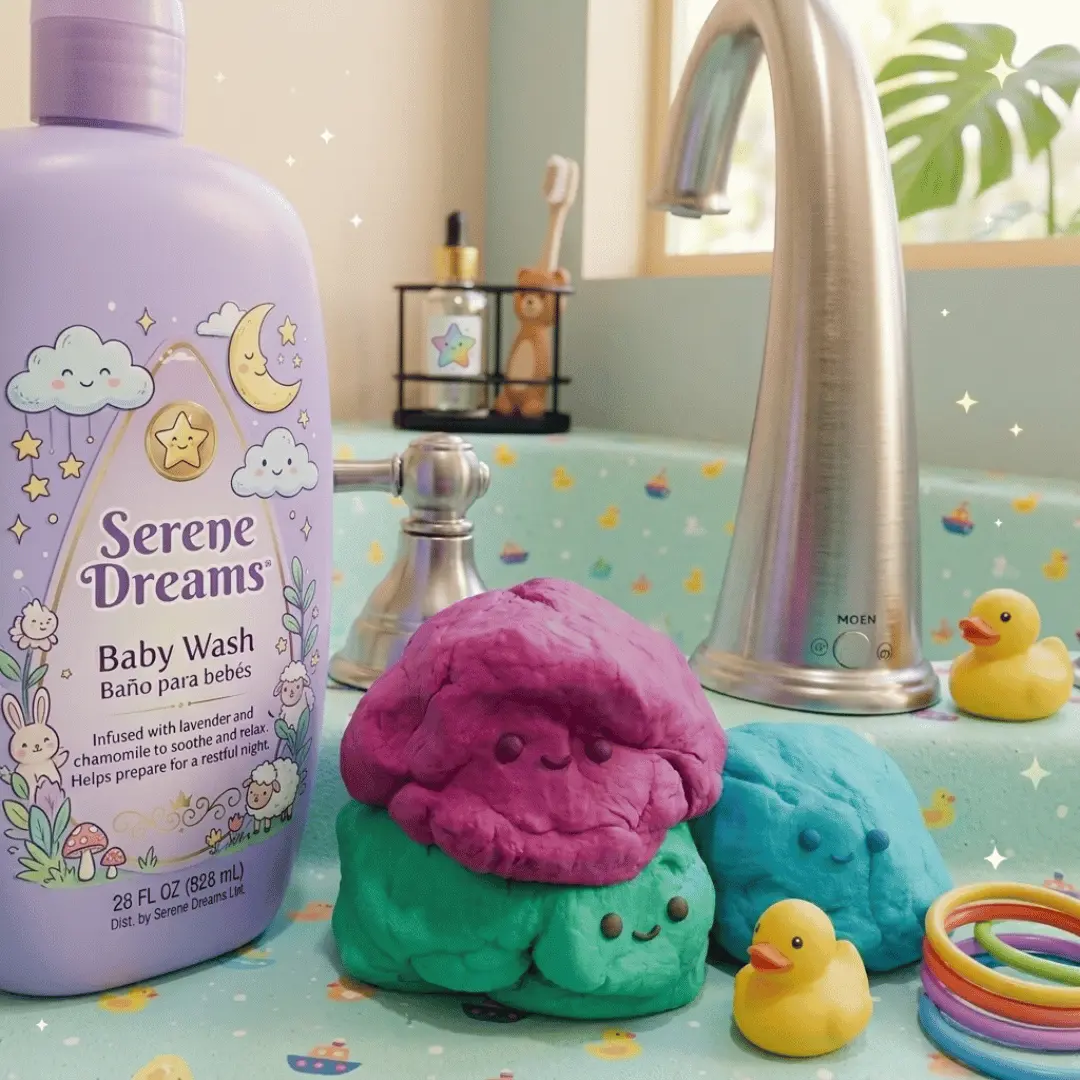
One of my favourite sensory dough ideas for EYFS, bath dough can be used during bath time itself — which means zero clean-up and a ready-made calm environment. Simply mix cornflour, water, and a squirt of bubble bath until you get a soft, mouldable consistency. Add a drop of food colouring if you want a splash of colour. The result turns an ordinary bath into a genuinely engaging sensory learning experience.
- Cornflour
- Water
- Bubble bath (a small squirt)
- Food colouring (optional)
Skills developed: fine motor strength, sensory exploration, relaxation, imaginative water play
Bath Dough
2
Dough two
Air dry clay — creative modelling that lasts
This simple homemade air dry clay is perfect for creative modelling and for making keepsakes — handprints, footprints, or small sculptures that harden naturally over time and can be painted once dry. Mix bicarbonate of soda, cornflour, and water, then heat gently on the hob while stirring until a smooth, thick dough forms. Once cooled, children can shape and model freely.
- 1 cup bicarbonate of soda
- ½ cup cornflour
- ¾ cup water
- Heat gently and stir constantly until the dough pulls away from the pan
- Allow to cool completely before giving to children
- Once dry, creations can be painted to extend the activity further
Skills developed: creativity, fine motor strength, problem-solving, sustained focus
3
Dough three
Fluffy dough — a surprising sensory dough experience
Soft, light, and foamy, this sensory dough is a completely different texture from traditional dough — which makes it particularly exciting for children who have already become familiar with standard play dough. Mix cornflour and shaving foam until you reach a fluffy, cloud-like consistency. Add food colouring to extend the sensory experience visually. The unexpected lightness is often what children find most captivating.
- Cornflour
- Shaving foam
- Food colouring (optional)
Skills developed: creativity, fine motor strength, problem-solving, sustained focus
4
Dough four
Cloud dough — the calming sensory dough for EYFS quiet time
Silky, soft, and genuinely calming, this is one of the most effective sensory dough ideas for EYFS quiet-time activities. Made from just cornflour and hair conditioner, it has a beautiful smooth texture and a gentle scent that makes it soothing to handle. Furthermore, the more conditioner you add, the softer the dough becomes, so you can adjust the texture to suit your child.
- Cornflour
- Hair conditioner (any type — choose a gentle scent)
- Start with a 2:3 ratio (2 parts conditioner to 3 parts cornflour) and adjust from there
- Use as a quiet-time activity after lunch or before rest time
- Avoid strongly scented conditioners for children with sensory sensitivities
Skills developed: emotional regulation, sensory exploration, fine motor strength, imaginative play
5
Dough five
Classic play dough — the EYFS sensory dough essential
No list of sensory dough ideas for EYFS would be complete without classic play dough. Simple, versatile, and endlessly reusable, it is the most widely used dough in early years settings for good reason. Mix plain flour, salt, oil, water, and food colouring if desired, then knead until smooth. Stored in an airtight container, it keeps well for several weeks.
- 2 cups plain flour
- 1 cup salt
- 1 cup water
- Splash of oil
- Food colouring (optional)
- Mix all ingredients together and knead until smooth and pliable
- Store in an airtight container — it keeps well for several weeks
- Add rolling pins, cutters, or loose parts like buttons and sticks to extend play
Skills developed: fine motor strength, early writing preparation, creativity, language development
For more themed ideas using commercial Play-Doh specifically, see: Play-Doh Activities for Toddlers and Preschoolers: 5 Fun Ideas.
Dough play feels like fun. It builds like a foundation.
As both a mum and a teacher, I genuinely believe sensory dough play is one of the most valuable early years learning activities — not because it looks educational, but because it works. It is simple, affordable, and children always ask for it again.
Anything that keeps children happily occupied while quietly building the skills they need for writing, reading, and life is always worth making time for.
Common questions about sensory dough ideas for EYFS
Written by an Early Years teacher & mum
I write about the practical, hands-on side of early years learning — the kind that fits into a real family day. For more ideas across maths, literacy, science, and outdoor play, see our full guide to EYFS activities at home.