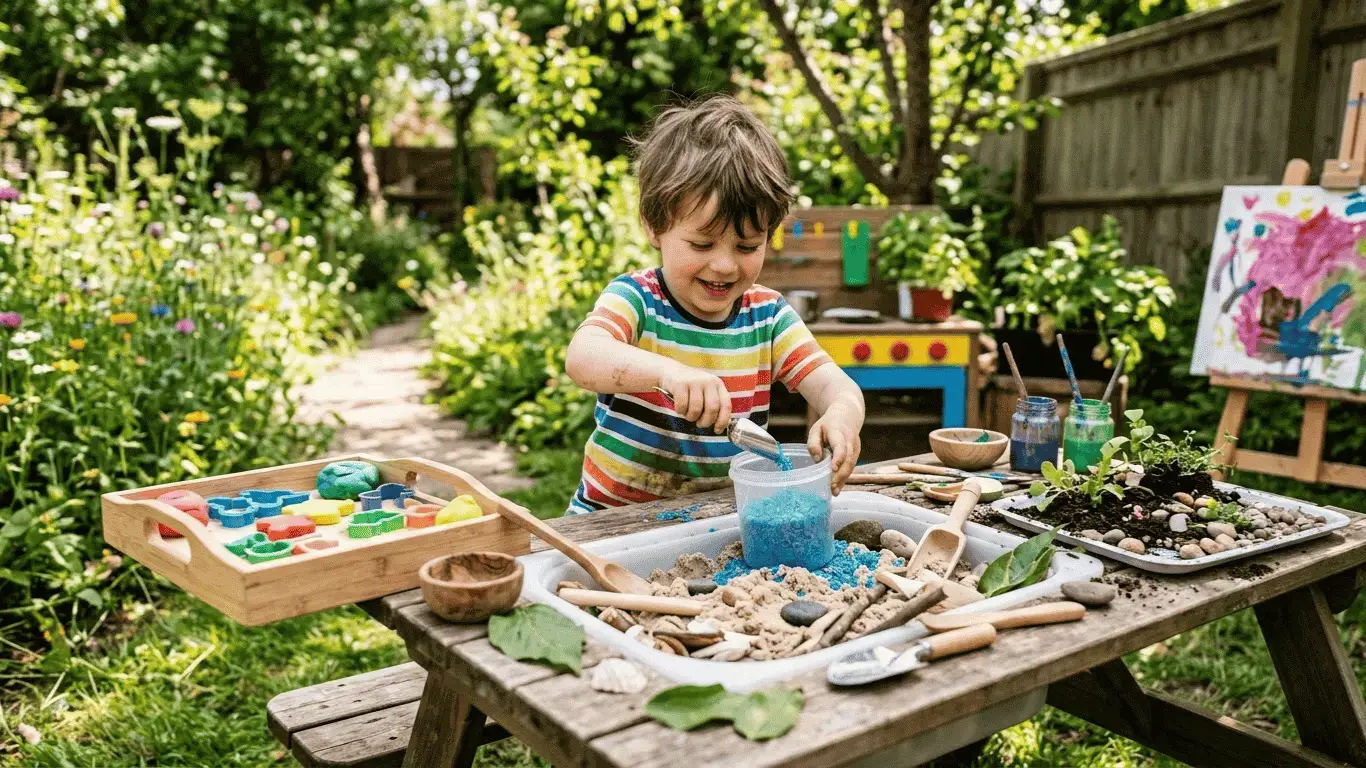
You don’t need a vegetable patch, a green thumb, or a single seed packet to turn your garden into a place of real early years learning — just a handful of simple play ideas.
Most “garden activities for kids” lists are really about growing things — planting, watering, harvesting. This one isn’t. As both a mum and a primary school teacher, I want to share five ways to use the garden as a play space, not a project — perfect if you’ve got an outdoor area but no time, interest, or know-how for actual gardening.
Each idea below builds real early years skills while feeling completely like play. They sit alongside our wider guide to 5 Hands-On Early Years Learning Activities at Home or Outdoors, if you’re after even more ideas across maths, literacy, science, and movement.
What you’ll find in this post
- 5 garden play activities that need no planting or gardening skill
- What you’ll need — usually things you already have at home
- Why each activity matters for your child’s development
- Easy ways to bring them into your weekly routine
Why garden activities for kids matter so much
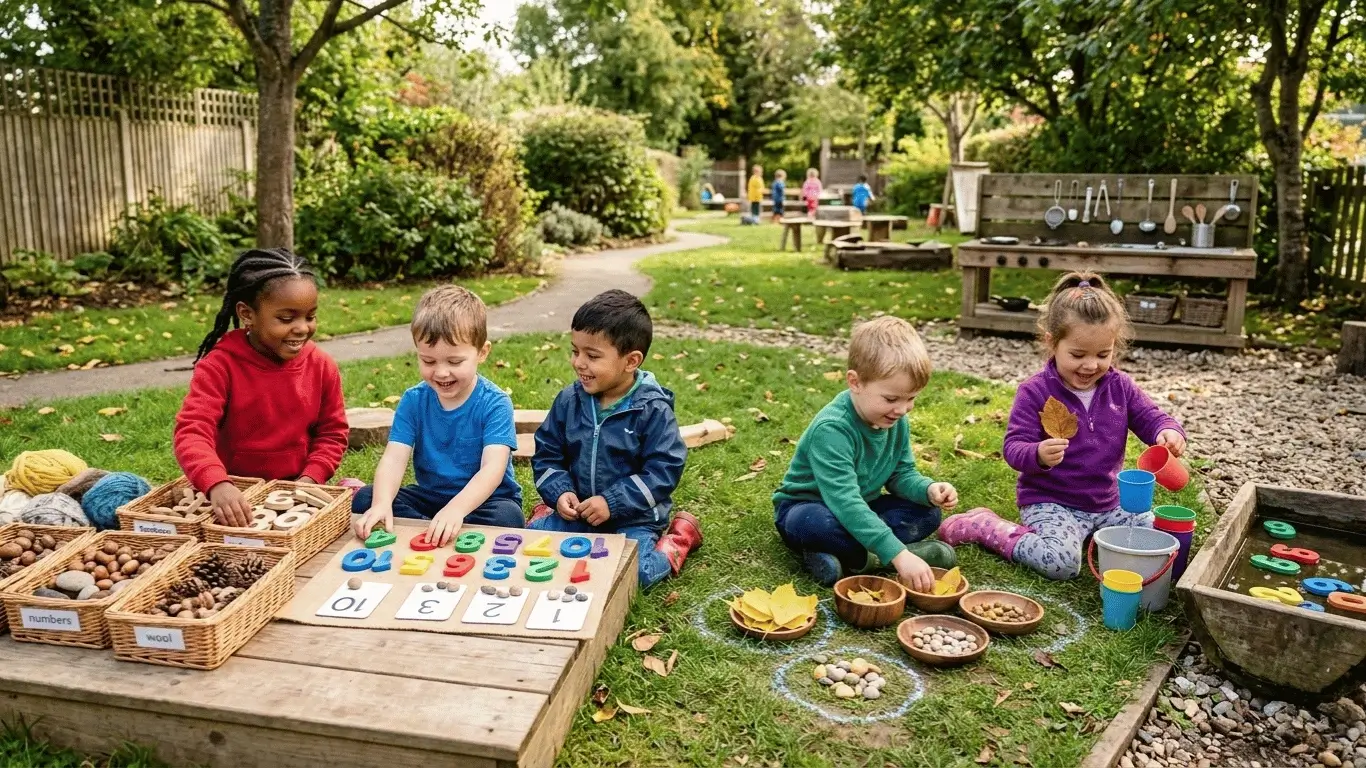
Garden play supports far more than “getting some fresh air.” It quietly builds the skills children need across early years learning — often more effectively than a worksheet ever could.
Through outdoor play, children naturally:
Regulate emotions and reduce anxiety
Develop gross and fine motor skills
Improve focus and concentration
Build confidence and independence
5 ways to play
Garden play ideas (no planting needed)
Pick one to start with — you don’t need to do them all at once.
1
play idea one
Create a cosy garden reading area
A simple outdoor reading nook is one of the easiest garden activities for kids to set up — and one of the most calming. A pop-up tent or a blanket with cushions is all you really need to create a space your child will want to return to again and again.
- Use a pop-up tent, teepee, or simply a picnic blanket with cushions
- Add a mix of picture books, fiction, and nature non-fiction
- Bring out a soft toy or two to make the space feel cosy
2
play idea two
Set up a pretend garden shop
A garden shop role play is a brilliant way to combine imaginative play with early maths — and it’s one of the garden activities for kids that grown-ups often enjoy just as much. Empty cereal boxes, containers, and jars become “stock,” ready to be priced, sold, and bought.
- Use cereal boxes, empty containers, jars, or tubs as stock
- Add price tags and pretend money — stones or coins work well
- Take turns being shopkeeper and customer to build conversation
3
play idea three
Go on a bug hunt and build an insect hotel
A bug hunt is one of the most engaging outdoor science activities for kids, and it costs nothing at all. Search together in the grass, under logs, and around plants, then turn the discoveries into a shared project by building a simple insect hotel.
- Search for insects in the grass, under logs, and around plants
- Build an insect hotel using sticks, leaves, bark, and pinecones
- Talk about what each bug needs to feel safe and sheltered
4
play idea four
Try water play with squeezy bottles
Water play is one of the simplest and most engaging garden activities for kids — and it’s brilliant for little hands. Fill empty washing-up liquid bottles with water and let your child squeeze, draw shapes, and make patterns on paving slabs or fences.
- Fill empty washing-up liquid bottles with water
- Encourage squeezing, drawing shapes, and making patterns
- Try writing letters or their name in water on the patio
5
play idea five
Make nature rubbings with crayons
Nature rubbings are a lovely, low-mess creative activity that gets children noticing texture and pattern in the world around them. All you need is paper and a wax crayon, held flat against bark, leaves, fences, or paths.
- Use plain paper and a wax crayon held on its side
- Try rubbings of tree bark, leaves, fences, and paths
- Compare the different patterns and talk about what made them
It doesn’t need to be complicated. It just needs to happen.
Garden activities for kids naturally support literacy, maths, science, physical development, and emotional wellbeing — all without feeling like “learning” to your child.
As both a mum and a teacher, I can honestly say: a little outdoor time, a few simple props, and your company are worth more than any expensive toy.