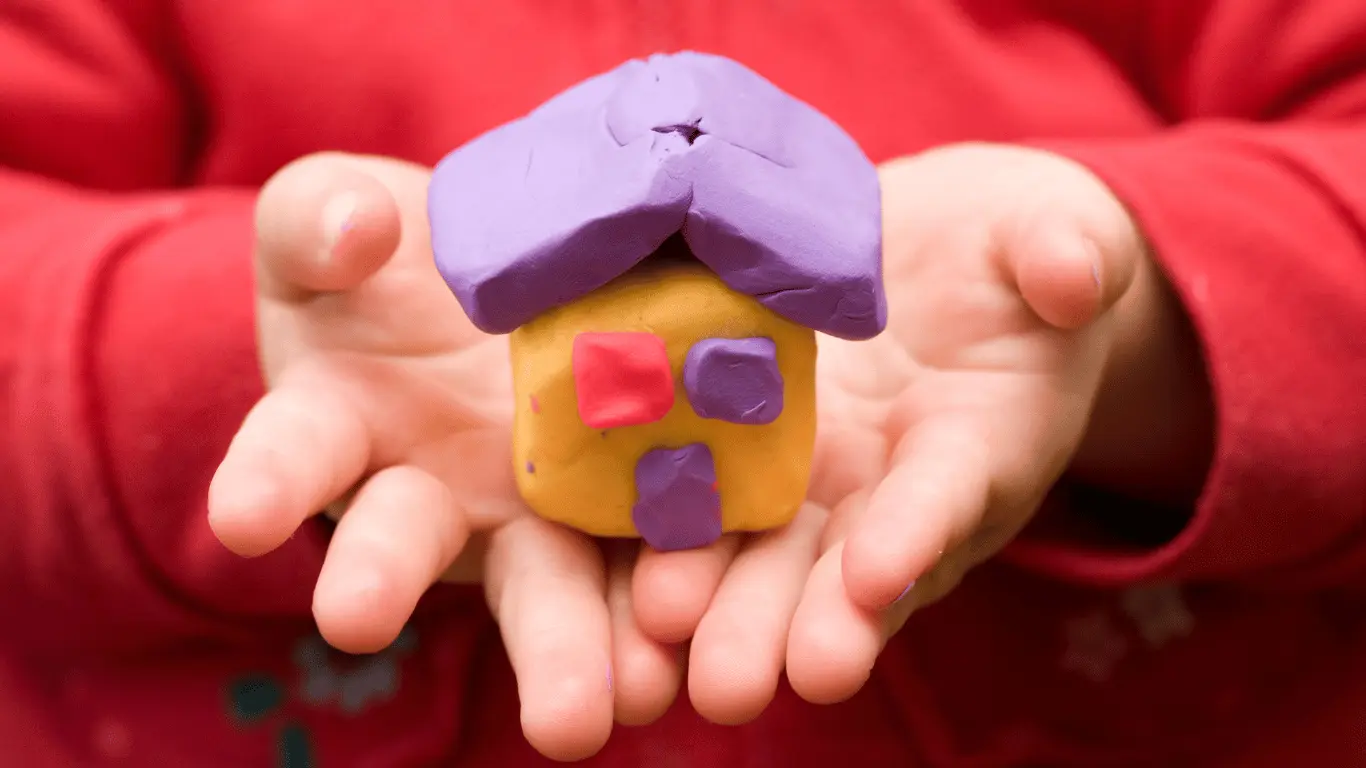
Play-Doh builds fine motor skills, early counting and letter recognition, and imaginative storytelling — and it’s one of the lowest-prep activities you’ll ever pull out of a cupboard.
As a parent, I know how quickly toddlers get bored, and how hard it can be to find activities that are both fun and genuinely useful. Play-Doh has consistently been one of the few things that holds up — soothing to squeeze and mould, endlessly reusable, and quietly doing a lot of developmental work while it looks like simple fun.
Here are five ways to get more out of a single tub, from open-ended sensory play through to imaginative themed sessions.
What this post covers
- 5 Play-Doh activities, from sensory play to imaginative role play
- The specific skills each one builds
- Play-Doh sets and tools worth having for each activity
- Answers to the questions parents ask most about Play-Doh play
Why Play-Doh activity variety matters
Plain squishing and rolling is valuable on its own, but rotating through different types of Play-Doh play keeps children engaged for longer and spreads the developmental benefit across more skills — fine motor strength, early maths and literacy, problem-solving, and imaginative language.
It’s also genuinely calming. The repetitive pressing and moulding motion gives many toddlers a focused, soothing outlet — useful for quiet time as much as for active play.
Builds fine motor strength and hand coordination
Supports early number and letter recognition
Sparks creativity and imaginative storytelling
Calming sensory input that supports focus
The 5 activities
Five ways to play with Play-Doh
Start with whichever matches your child’s current stage — you don’t need all five tools at once.
1
Activity one
Simple sensory play with Play-Doh
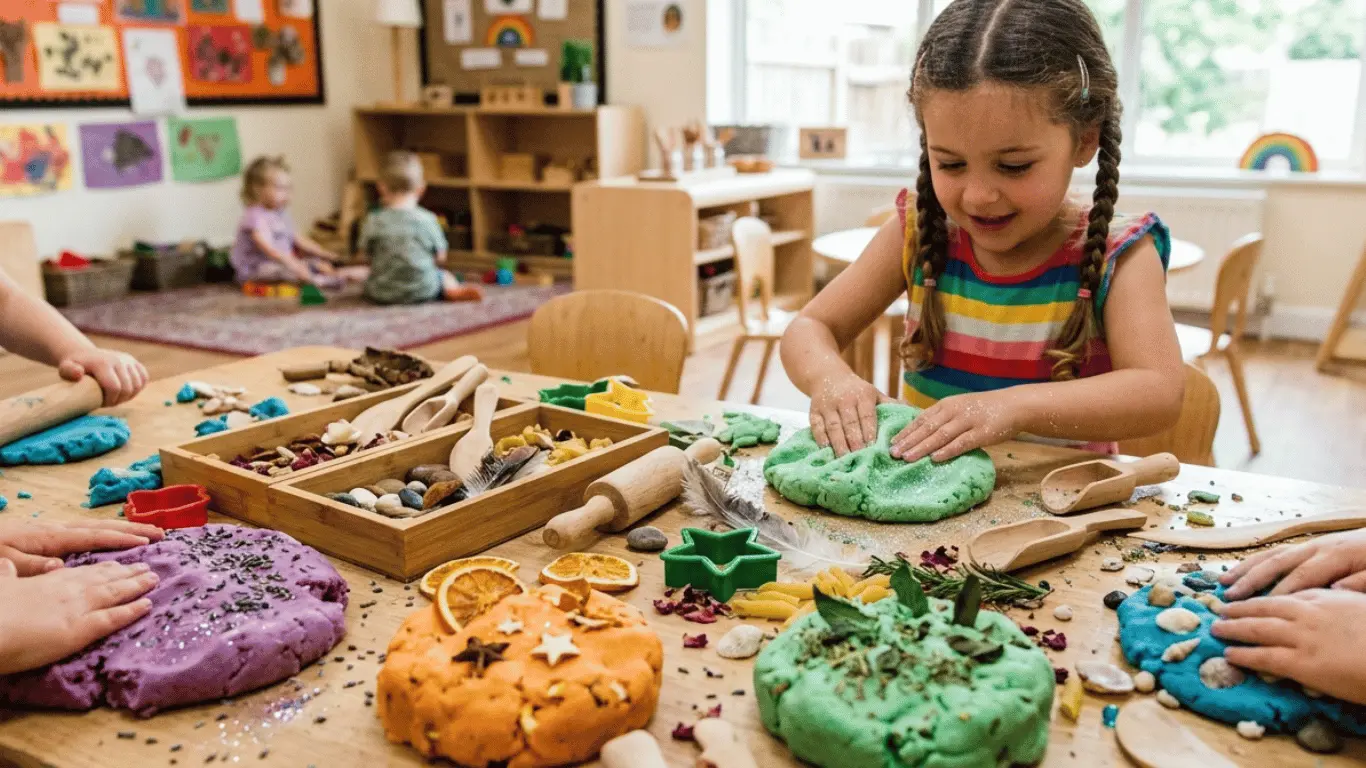
Toddlers love to feel and explore textures, and Play-Doh is perfect for open-ended sensory play because it’s soft, pliable and easy for little hands to manipulate without any pressure to “make” something.
- Sensory exploration and tactile awareness
- Strengthens hands and fingers
- Encourages descriptive language like “soft,” “squishy” and “smooth”
2
Activity two
Early learning games with Play-Doh
Turning Play-Doh into shapes, numbers and matching games makes learning feel playful rather than formal. Preschoolers especially love using tools and moulds to make recognisable shapes they can count or talk about.
- Early number and letter recognition
- Practice making shapes and patterns
- Helps with focus and problem-solving
3
Activity three
Creative fine motor play with Play-Doh
Squeezing, pinching and rolling Play-Doh builds the hand strength children need for future skills like writing, zipping coats, and using scissors — without it ever feeling like practice.
- Boosts finger strength and dexterity
- Supports mark-making and early pencil grasp
- Keeps hands and brains engaged together
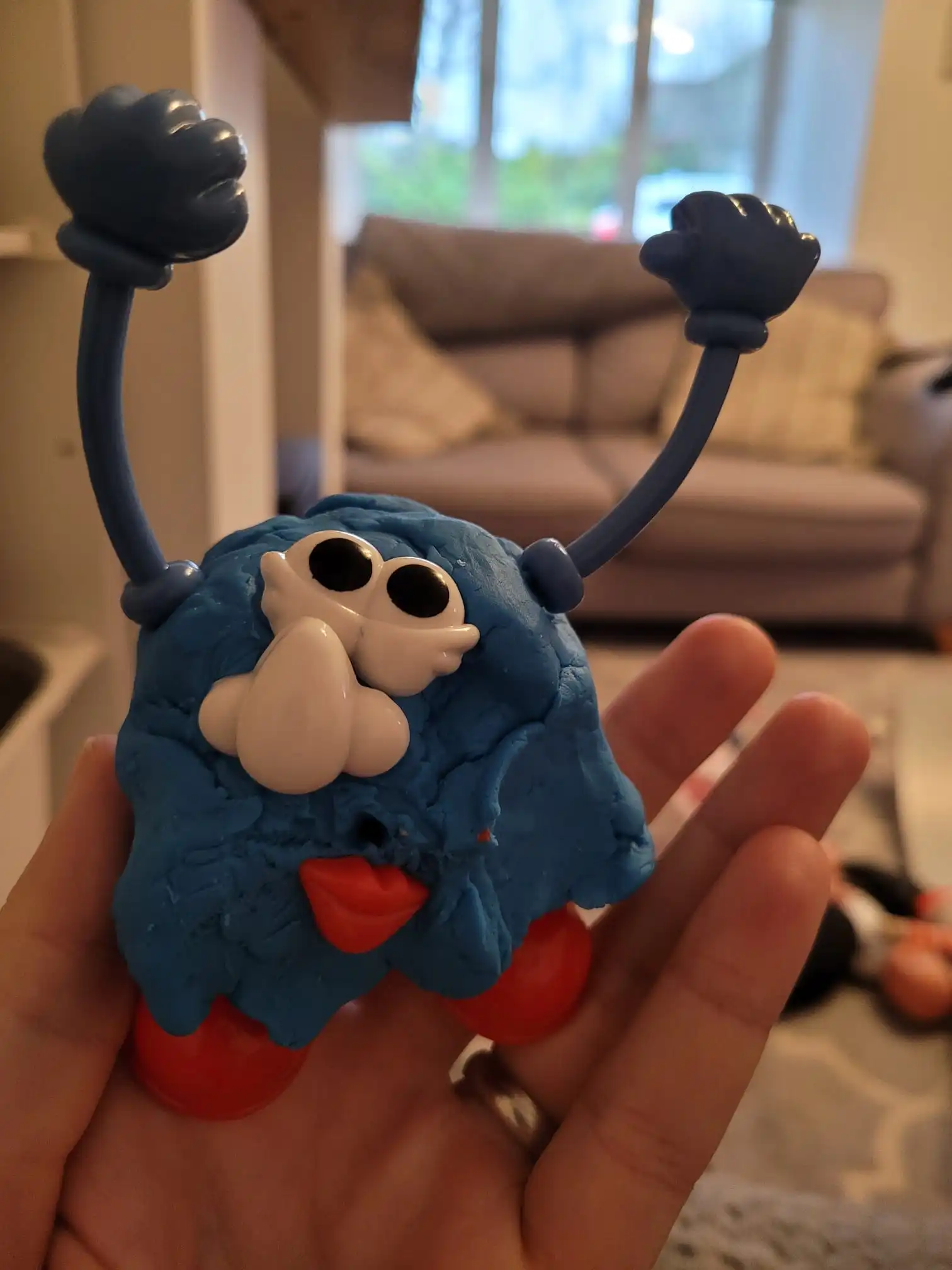
Our daughter was so happy with the playdoh monster she created.
4
Activity four
Hands-on discovery with Play-Doh
Discovery play invites problem-solving and curiosity. Hiding toys in Play-Doh, using themed moulds, or setting simple challenges keeps children thinking and experimenting — and it’s great one-on-one bonding time too.
- Encourages exploring cause and effect
- Strengthens tactile curiosity
- Promotes patience and focus
5
Activity five
Themed Play-Doh imaginative play
Themes turn Play-Doh from simple play into storytelling play. Whether they’re “baking” treats or running a café, themed play encourages pretend scenarios, conversation and laughter.
- Boosts creativity and imagination
- Supports social language skills
- Encourages cooperative play
One tub, five ways to play
Play-Doh is one of those simple, brilliant materials that keeps children entertained and learning. From sensory exploration to themed pretend play, it supports fine motor skills, early learning and imagination without complicated instructions or prep.
For more low-prep, mostly mess-free ideas beyond Play-Doh, see our mess-free activities guide. And if your child is moving into the 3–5 EYFS stage, our EYFS activities guide covers the next stage of hands-on learning.
Common questions about Play-Doh activities
Written by a mum & primary school teacher
With years in the classroom and plenty of trial and error at home, I write about the practical, honest side of early childhood — activities that genuinely work, not just ones that photograph well.