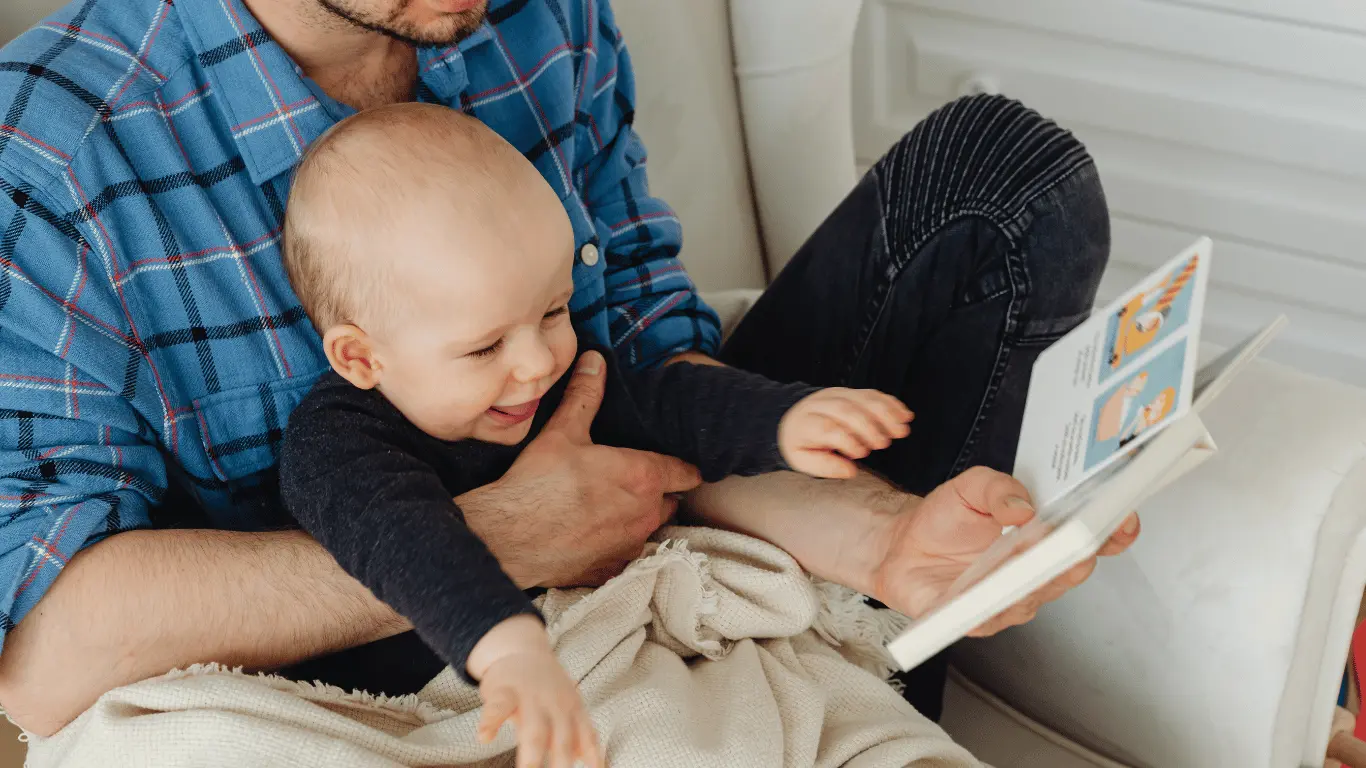
Many parents wonder how to support baby language development when their baby cannot yet talk. It can feel strange speaking to someone who doesn’t respond with words — but these early months are actually the most important stage of communication development in a child’s life.
As an Early Years educator and parent, I’ve seen how much language learning happens long before first words appear. Babies are learning from the moment they are born — listening to voices, noticing facial expressions, and understanding the back-and-forth of communication through everyday interactions. Remarkably, this learning begins even before birth, as the NHS confirms that talking to your baby from birth is one of the most important things you can do.
Importantly, knowing how to support baby language development does not require special equipment or complicated activities. Instead, simple and consistent interactions throughout the day build the foundations for speech, understanding, and connection. This post is part of our complete guide to early language development from birth to age 5 — worth reading alongside this one for the bigger picture.
What this guide covers
- What baby language development looks like from 0 to 12 months
- 5 simple things you can do every day to support it
- Why talking to a baby who can’t talk back matters so much
- When to speak with your health visitor if you have concerns
Why these early months matter so much
The first year of life is one of the most significant periods for brain development. During this time, the neural pathways that underpin language are forming rapidly — and the experiences babies have now shape their communication skills for years to come.
Through everyday language-rich interaction, babies in their first year develop:
The ability to tune into speech sounds and rhythm
Understanding of social communication through faces and expressions
Turn-taking — the back-and-forth rhythm that underpins all conversation
Early vocabulary — words they understand before they can say them
5 techniques to try
How to support baby language development (0–12 months)
All five work — start with whichever feels most natural today.
1
technique one
Talk to your baby throughout the day
Talking to your baby is one of the most powerful things you can do for their language development — even though they don’t understand words yet. Narrating daily life might feel strange at first, but it quickly becomes second nature. You might describe what you’re doing, what your baby can see, or simply what’s happening around you.
Language milestones — birth to age 5
0–3 months
- Responds to familiar voices
- Makes eye contact
- Cries to communicate needs
- Startles at loud sounds
3–6 months
- Cooing and gurgling begins
- Responds to your tone
- Laughs and squeals
- Watches mouths when talking
6–9 months
- Babbling starts (ba, da, ma)
- Recognises own name
- Turn-taking sounds begin
- Responds to “no”
9–12 months
- First words may appear
- Understands simple words
- Uses gestures to communicate
- Points to objects of interest
- Narrate daily routines: “now we’re putting on your socks — one foot, two feet”
- Describe what your baby can see, hear, and touch as you move through the day
- Talk regularly in any language you feel most comfortable — consistency matters most
2
technique two
Use face-to-face interaction and eye contact
Babies learn language best when they can see your face. Eye contact and facial expressions help them understand emotions, attention, and social interaction — all of which are foundational to communication. Simply positioning yourself face-to-face when you talk makes a significant difference to how much your baby tunes in to your voice.
- Position yourself at your baby’s level whenever you talk — on the floor, at the changing mat, during feeding
- Use exaggerated facial expressions to hold their attention — babies are naturally drawn to animated faces
- Wait after speaking and give your baby time to respond with a sound or expression before continuing
Songs and rhymes are also brilliant face-to-face activities — see our guide: 5 Powerful Benefits of Nursery Rhymes for Early Childhood Development.
3
technique three
Respond to your baby’s sounds and babbling
Babbling is a crucial stage of baby language development. When your baby coos, babbles, or makes sounds, they are experimenting with their voice and discovering how communication works. Responding to these sounds — even though they’re not words — shows your baby that their communication matters and that it gets a reaction. That feedback is essential.
- Smile and respond to sounds with a sound of your own — copy what they make
- Pause and wait after responding, giving your baby space to “reply”
- Treat their babbles as real conversation: “oh really? tell me more!”
4
technique four
Use everyday routines to build language skills
Daily routines offer some of the most natural and powerful opportunities to support language development in babies. Feeding, bath time, getting dressed, and playtime all provide moments for communication that feel effortless because they happen anyway. You can talk about what’s happening, name objects, and describe actions — without setting aside separate “learning time.”
- Name objects as you use them: “here’s your towel — it’s soft and warm”
- Acknowledge gestures like pointing and reaching as real communication — name what they’re pointing at
- Keep language simple and specific: one or two words at a time is often more effective than long sentences
5
technique five
Name your baby’s feelings and experiences
Babies experience strong emotions long before they have the words to express them. Crying, fussing, and changes in behaviour are all ways of communicating needs and feelings. Gently naming those emotions as they happen — “I can see you’re upset, you’re tired and you want to be held” — is one of the most underrated things a parent can do for their baby’s language and emotional development.

- Name feelings simply and calmly: “you’re hungry,” “you’re tired,” “that was scary”
- Use a warm, calm voice alongside the words — the tone reinforces the meaning
- Narrate positive emotions too: “you’re happy! you love this song, don’t you?”
As your baby grows into toddlerhood, emotional language becomes even more important — see: Toddler Language Development: 5 Things Every Parent Should Know (Ages 1–3).
Supporting your baby’s language development is about connection, consistency, and ordinary moments.
Talking, listening, responding, and simply being present all build a strong foundation for communication. You don’t need to do anything complicated — and you certainly don’t need to get it perfect.
Small interactions repeated throughout the day have a powerful cumulative impact. By creating a language-rich environment from birth, you’re giving your baby the best possible start for a skill they’ll use every day of their lives.
Common questions about baby language development
Written by an Early Years educator & mum
With over a decade in early years education and children of my own, I write about the practical, honest side of child development — because parents deserve clear information, not just reassurance. For the complete guide to language development from birth to age 5, visit Early Language Development: A Parent’s Complete Guide.