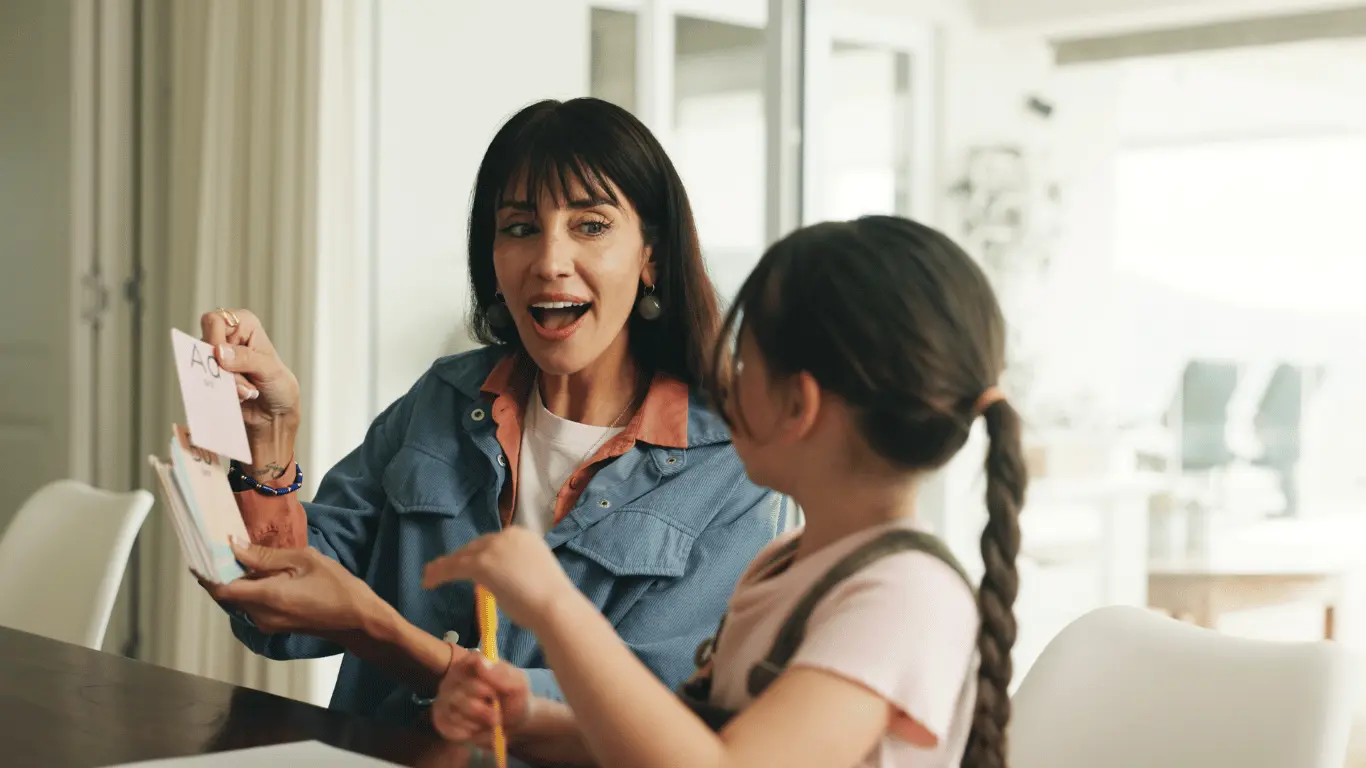
Early language development is about far more than learning to talk. It shapes how children express emotions, build relationships, develop confidence, and engage with the world around them — right from the very beginning.
As an Early Years educator, I’ve seen how strong communication skills can transform a child’s behaviour, learning, and wellbeing. The reassuring news for parents is this: you are already your child’s most important language teacher. The everyday moments you share together — talking, playing, reading, singing — matter more than any specialist programme or expensive resource.
This is the complete parent guide to early language development from birth to age 5. For a closer look at the toddler years specifically, see our companion post: Toddler Language Development: 5 Things Every Parent Should Know (Ages 1–3).
What this guide covers
- When language development really begins — and why it starts earlier than you think
- How everyday interaction shapes your child’s communication skills
- Why songs, stories, and play are among the most powerful language tools you have
- What typical milestones look like from birth to age 5
- When to seek support — and how to do it without worry
Why early language development matters so much
The years from birth to five are the most significant window for language acquisition in a child’s entire life. The brain is rapidly forming neural pathways tied to communication, and the experiences children have during this period shape their speech, vocabulary, and understanding for years to come.
Strong early communication skills support:
Confidence to express needs, ideas, and feelings
Literacy — vocabulary is one of the strongest predictors of reading success
Social skills — conversation is learned through conversation
Learning — language is how children make sense of the world
5 things every parent should know
Early language development from birth to age 5
Read all five — then pick one small thing to try today.
1
point one
Language development starts long before first words
Many parents assume language development begins when a child starts talking — but it actually starts much earlier. Babies begin learning language by listening to voices and sounds even before birth, and from the moment they arrive, every sound, expression, and interaction is teaching them that communication is meaningful.
- Respond to your baby’s coos and babbles as if they’re having a conversation with you
- Make eye contact and use facial expressions — babies learn from faces before words
- Narrate what you’re doing throughout the day, even when they can’t respond
- Copy your baby’s sounds — they’ll often copy you back, and that’s language learning
For a deeper look at supporting your baby’s earliest communication: 5 Simple Ways to Support Your Baby’s Language Development.
2
point two
Everyday interaction is the most powerful tool you have
You don’t need flashcards, apps, or specialist toys to support early language development. The most powerful tool is talking — throughout the day, in ordinary moments, about ordinary things. Narrating daily routines, describing what you see, and introducing new vocabulary during real-life experiences all help children connect words with meaning in the most natural way possible.
- Talk through mealtimes, bath time, and getting dressed — all of it counts
- Describe what you can see, hear, smell, and touch as you move through the day
- Ask questions and wait — give your child time to respond before filling the silence
- Follow their interest and talk about whatever they’re focused on
3
point three
Songs, stories, and play build strong language skills
Children learn language through repetition, rhythm, and play — and songs, nursery rhymes, and shared reading provide all three in one. Stories build vocabulary and listening skills. Pretend play gives children the space to try out new words, take turns in conversation, and describe ideas and feelings without pressure to get it right.
- Read the same books repeatedly — familiarity builds confidence to join in and predict
- Sing nursery rhymes daily, leaving gaps for your child to fill in the missing word
- Encourage pretend play — shops, kitchens, and characters all generate rich language
- Ask open questions about books: “what do you think will happen next?”
See our full guide to why songs matter so much: 5 Powerful Benefits of Nursery Rhymes for Early Childhood Development.
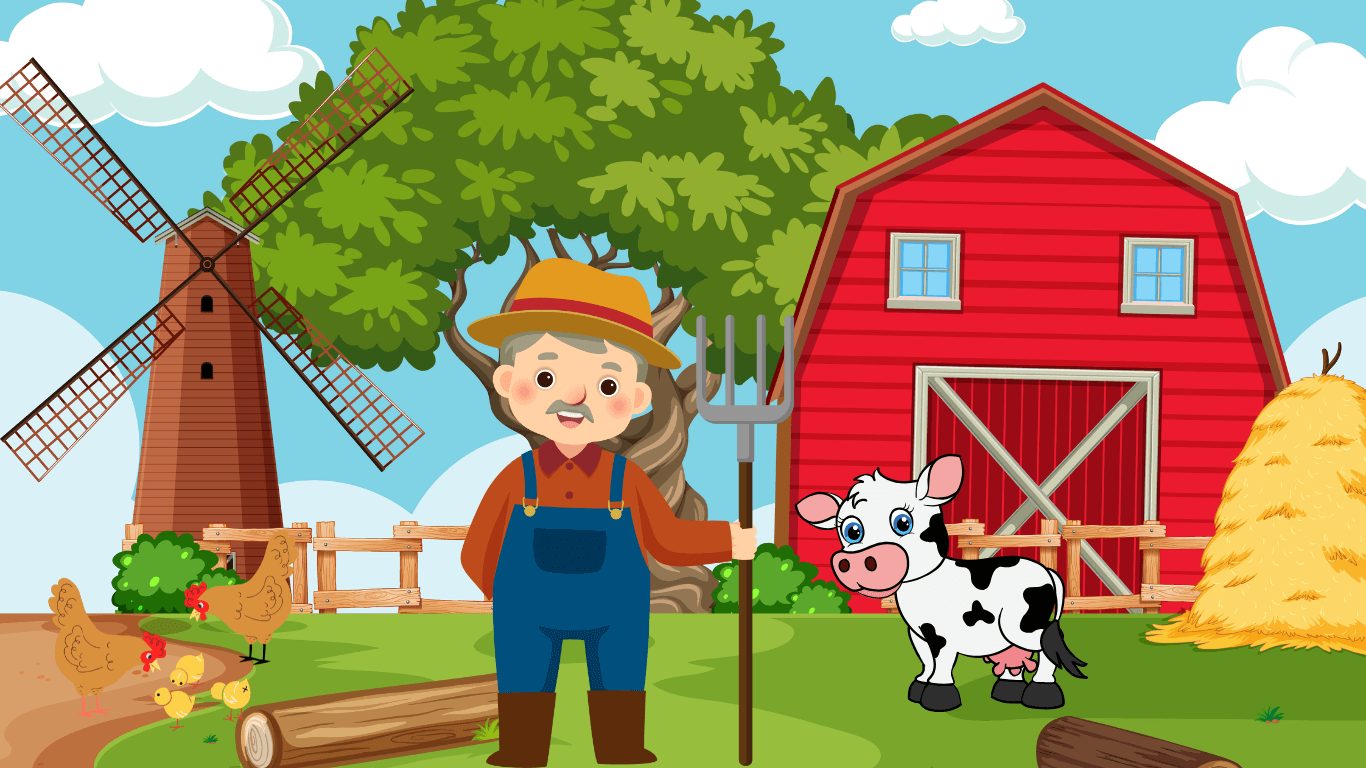
I can’t tell you how many times I have sang this song!
4
point four
Language development looks different at every stage
Every child develops at their own pace — but understanding what typically happens at each stage can be genuinely reassuring. The milestones below are guides, not fixed targets. Progress matters far more than hitting a particular point at a particular age.
Language milestones — birth to age 5
0–12 months
- Responds to voices and sounds
- Babbles and experiments with noise
- Uses gestures and eye contact
1–2 years
- First meaningful words appear
- Two-word phrases begin
- Follows simple instructions
2–3 years
- Short sentences develop
- “Why” questions begin
- Vocabulary grows rapidly
3–5 years
- Conversations and stories
- Understood by most adults
- Early literacy skills emerge
- Compare your child to their own journey, not other children’s timelines
- Celebrate every new word, gesture, or phrase — all progress counts
- Keep a casual note of new words — you’ll be surprised how quickly the list grows
For the full toddler language picture, see: Toddler Language Development: 5 Things Every Parent Should Know (Ages 1–3).
5
point five
Early support always makes a difference
While every child develops differently, there are times when a conversation with a professional is genuinely valuable. Not because something is definitely wrong — but because early support, when it’s needed, makes a real and lasting difference. Reaching out is never overreacting. It’s one of the best things a parent can do.
- Trust your instincts — you know your child better than any professional does
- Raise concerns at your regular health visitor or GP appointment
- Note new words and phrases so you can share them — it helps professionals assess progress
Worth mentioning to your health visitor or GP
These aren’t reasons to worry — they’re prompts to seek a professional opinion sooner rather than later:
- No babbling or gestures by 12 months
- No words at all by 15–18 months
- Not combining two words by age 2
- Very difficult to understand by age 3–4
- Seems frustrated when trying to communicate
- Has lost words or skills they previously had
In many areas you can self-refer to NHS Speech and Language Therapy — your health visitor can advise on local referral routes.
Explore more early years guides
This is the pillar guide to early language development. For more in-depth reading on specific areas, explore our related posts below.
Early language development is built through connection, consistency, and everyday moments.
Talking, listening, singing, reading, and playing together contribute to strong communication skills far more than any formal lesson or specialist programme ever could.
Small, meaningful interactions repeated daily make a lasting difference. By creating a home where conversation is valued, you’re giving your child a foundation that supports learning, confidence, and relationships for years to come.
Common questions about early language development
Written by an Early Years educator & mum
With over a decade in early years education and children of my own, I write about the practical, honest side of child development — because parents deserve clear information, not just reassurance.