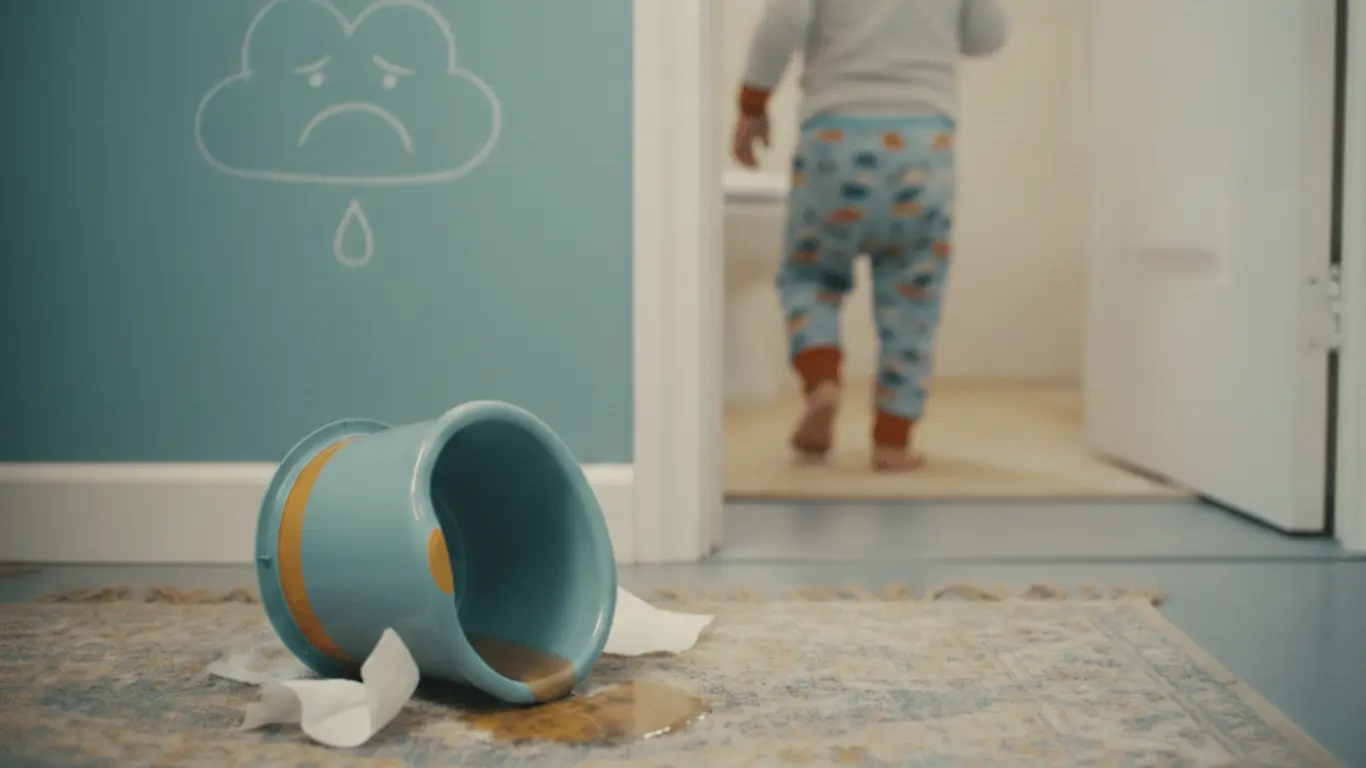
Just when you think you’re past the accidents and nappies, your toddler suddenly starts having accidents again — or refuses the potty altogether.
Potty training can feel like such a big win when it finally clicks, which is why potty training regression can be so upsetting. We’ve been there, and it can really knock your confidence as a parent.
The most important thing to know is that toddler potty training setbacks are incredibly common. Regression doesn’t mean you’ve failed, or that your child has forgotten how to use the toilet — it usually means something else is going on.
What you’ll find in this post
- The 5 most common reasons potty training regression happens
- What actually helped us handle each one calmly
- How to tell if it’s a normal phase or worth flagging to your GP
- Simple ways to rebuild your toddler’s confidence with the potty
First: regression isn’t failure — yours or theirs
It’s easy to panic when progress you worked hard for suddenly seems to disappear. But potty training isn’t a straight line for most toddlers — it’s completely normal to move forward, slip back, and move forward again before it fully settles.
If you’ve already read our complete guide to potty training your toddler, this post picks up from there — for when things wobble after a good start.
Regression is common, not a failure
Reduce pressure rather than adding more
Reassurance works better than correction
Know when it’s worth a GP chat
The 5 reasons
Why potty training regression happens
Understanding the cause makes it far easier to respond calmly.
1
Reason one
Big changes can trigger regression
Toddlers thrive on routine, so when something disrupts it, potty training is often the first thing to slip. Starting nursery, a new sibling, moving house, travelling, or a change in childcare can all unsettle things.
- Reduce pressure rather than adding more during the change itself
- Keep the potty routine as familiar and predictable as possible
- Expect a settling-in period of a week or two around any big change
2
Reason two
Illness or tiredness can lead to setbacks
When toddlers are unwell or overtired, potty training often slips. Even a mild cold, disrupted sleep, or a growth spurt can affect their ability to recognise when they need the toilet.
- Offer more reminders and extra patience during illness or poor sleep
- Don’t worry if accidents increase for a few days — it usually passes
- Watch for a pattern around skipped naps or unsettled sleep
3
Reason three
Pressure and expectations can backfire
Without meaning to, it’s easy to put pressure on potty training. Asking too often, reacting strongly to accidents, or comparing progress to other children can all increase anxiety — and for some toddlers, that pressure leads directly to regression.
- Build potty time into the routine — after meals, before bed — rather than asking repeatedly
- Stay calm during accidents, even when it’s hard
- Avoid comparing progress to siblings, friends, or milestones you’ve read about
4
Reason four
Emotional upsets can show up as regression
Toddlers don’t always have the words to explain how they’re feeling. Big emotions like anxiety, excitement, frustration, or feeling overwhelmed can come out through behaviour, including toileting.
- Make space for extra connection time when regression appears out of nowhere
- Name feelings simply: “that felt like a big day”
- Treat regression as communication, not misbehaviour
5
Reason five
Sometimes regression is just part of learning
This was the hardest one for us to accept. Potty training isn’t a straight line — even when everything seems right, setbacks can still happen. Many toddlers move through several phases of progress and regression before things finally settle for good.
- Expect some back-and-forth as completely normal, not a red flag
- If setbacks are combined with pain or withholding, read our 5 mistakes we made when our toddler withheld poo
- Stay consistent with routine even through the wobbles
Regression doesn’t erase the progress you’ve already made.
Potty training regression can feel frustrating and exhausting, but it’s almost always temporary. It’s usually a sign your child needs a little extra support, patience, or reassurance — not that something’s gone wrong.
If regression lasts a long time, becomes very distressing, or is combined with pain, constipation, or withholding, it’s always okay to speak to your GP or health visitor for guidance.
Common questions about potty training regression
Written by a mum & primary school teacher
Having been through potty training regression myself — and supported plenty of families through it in the classroom — I write about the practical, honest side of early childhood, because parents deserve real information, not just reassurance.