
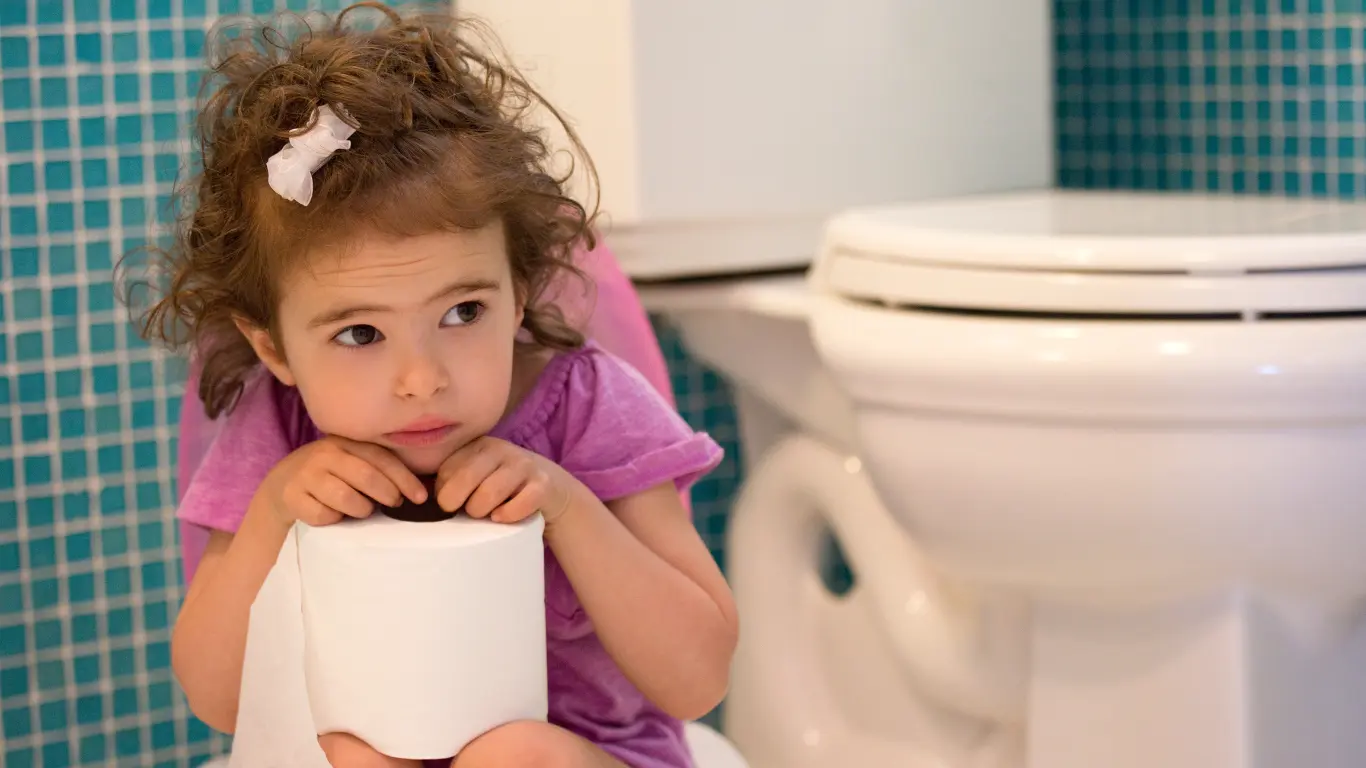
She cried. She hid. She refused to go anywhere near the potty. And for a while, we genuinely didn’t know what we’d done wrong.
Potty training is such a big milestone, but when your toddler starts withholding poo, it can feel overwhelming. We thought we had it all sussed, and then our daughter suddenly became anxious about going to the loo — and it was heartbreaking to watch.
Looking back, there are a few things we wish we’d done differently. If you’re in the middle of this right now: withholding is almost never defiance — it’s fear or discomfort. Here are the five mistakes we made, and what actually helped.
What you’ll find in this post
- The 5 mistakes we made when our toddler started withholding poo
- What genuinely helped her feel safe again
- Simple diet and routine changes that eased the discomfort
- When it’s time to speak to your GP or health visitor
First: withholding isn’t defiance
It’s easy to read a toddler refusing the potty as stubbornness. In our experience — and in what health visitors told us — it’s almost always something else: a painful poo, a scary experience, or anxiety that’s built up without them having the words to explain it.
That shift in understanding changed everything about how we responded:
Treat it as fear, not defiance
Keep the potty low-pressure and familiar
Ease physical discomfort through diet
Get support early rather than waiting it out
The 5 mistakes
How to help your child feel ready
These aren’t quick fixes — they’re small, consistent steps that build confidence over time.
1
Mistake one
Starting potty training before she felt ready
We thought we were following the signs: she stayed dry longer, talked about the potty, and showed curiosity. We assumed that meant she was fully ready and removed nappies for poo too soon.
- Keep nappies or training pants for poo while still encouraging wees on the potty
- Let your toddler set the pace — one day she refused entirely, and within a week of no pressure she was ready to try again
- Read our complete guide to potty training your toddler for a full step-by-step approach
2
Mistake two
Underestimating how scared she was — and not staying calm ourselves
At first, we thought she was being stubborn. In reality, one painful bowel movement had made her fearful. The more she held it in, the more uncomfortable she became, reinforcing the cycle. Our own stress about it didn’t help either — toddlers pick up on tension fast.
- Read a book about a toddler who learns to use the potty after being scared — it helped her feel less alone
- If she refuses to sit, don’t push — sit quietly nearby with a book instead
- Notice your own tension around potty time; toddlers mirror it
3
Mistake three
Focusing on the potty instead of the routine — and praising results, not effort
We kept asking, “Do you need to go?” The answer was always no, and potty time quickly became tense. We also caught ourselves praising her only when something actually happened, which made every unsuccessful sit feel like a small failure to her.
- Keep potty sessions short, around 5–10 minutes, as part of a daily rhythm after meals or before bed
- Try a sticker for sitting calmly, even with no result — just don’t tie it to “success”
- Stop asking repeatedly; let the routine do the work instead
4
Mistake four
Not adjusting her diet early enough
We assumed her diet was fine, but her stools were hard and uncomfortable — which made withholding worse and turned into a painful cycle.
- Add pears, prunes, vegetables, and wholegrains gradually — not all at once
- Make sure she’s drinking regularly through the day, not just at mealtimes
- A small prunes-and-yoghurt snack each afternoon made a noticeable difference for us
5
Mistake five
Waiting too long to ask for help
We hoped it would resolve on its own, but after several stressful days, we reached out to our GP and health visitor. They reassured us and gave practical strategies, including gentle stool softeners.
- Keep a simple log of days without poo, diet, and potty attempts to bring to your appointment
- Ask specifically about safe, short-term stool softener use if there’s pain or constipation
- See our 5 reasons potty training regression happens if setbacks continue after this settles
She didn’t need us to get it right. She needed us to stay calm.
Potty training a toddler who is withholding poo is exhausting and emotionally challenging, but it’s incredibly common — and usually temporary. This doesn’t reflect on your parenting.
The key is patience, reassurance, and small supportive steps: a predictable routine, praise for effort over outcome, easing discomfort through diet, and getting help when you need it.
Frequently asked questions about toddler poo withholding
Written by a mum & primary school teacher
Having navigated toddler poo withholding first-hand — and supported plenty of families through it in the classroom — I write about the practical, honest side of early childhood, because parents deserve real information, not just reassurance.