
Why Supporting Your Baby’s Language Development Matters
Many parents wonder how to support their baby’s language development when their baby cannot talk yet. It can feel strange speaking to someone who does not respond with words, but these early months are one of the most important stages of communication development.
As an Early Years educator and a parent, I have seen how much language learning happens long before first words appear. Babies are learning from the moment they are born, and even before. They listen to voices, notice facial expressions, and begin to understand the back and forth of communication through everyday interactions.
The good news is that supporting language development in babies does not require special equipment or complicated activities. Simple, consistent interactions throughout the day build the foundations for speech, understanding, and connection.
Below are five practical and realistic ways to support your baby’s language development from birth to twelve months.
Talk to Your Baby Throughout the Day
Talking to your baby is one of the most powerful ways to support early language development. Even though babies do not understand words at first, they are constantly learning by listening.
When my baby was small, I remember feeling unsure about what to say. Over time, narrating daily life became second nature. I talked about what I was doing, what my baby could see, and what was happening around us.
You might describe:
👶 getting dressed
👶 preparing food
👶 going for a walk
👶 changing a nappy
Hearing language in context helps babies begin to connect sounds with meaning. The tone, rhythm, and repetition of your voice all play a role in helping your baby learn how language works.
Talking regularly also exposes babies to a wide range of words, which supports vocabulary development later on, even though they will not use those words for some time.
2.
Use Face to Face Interaction and Eye Contact
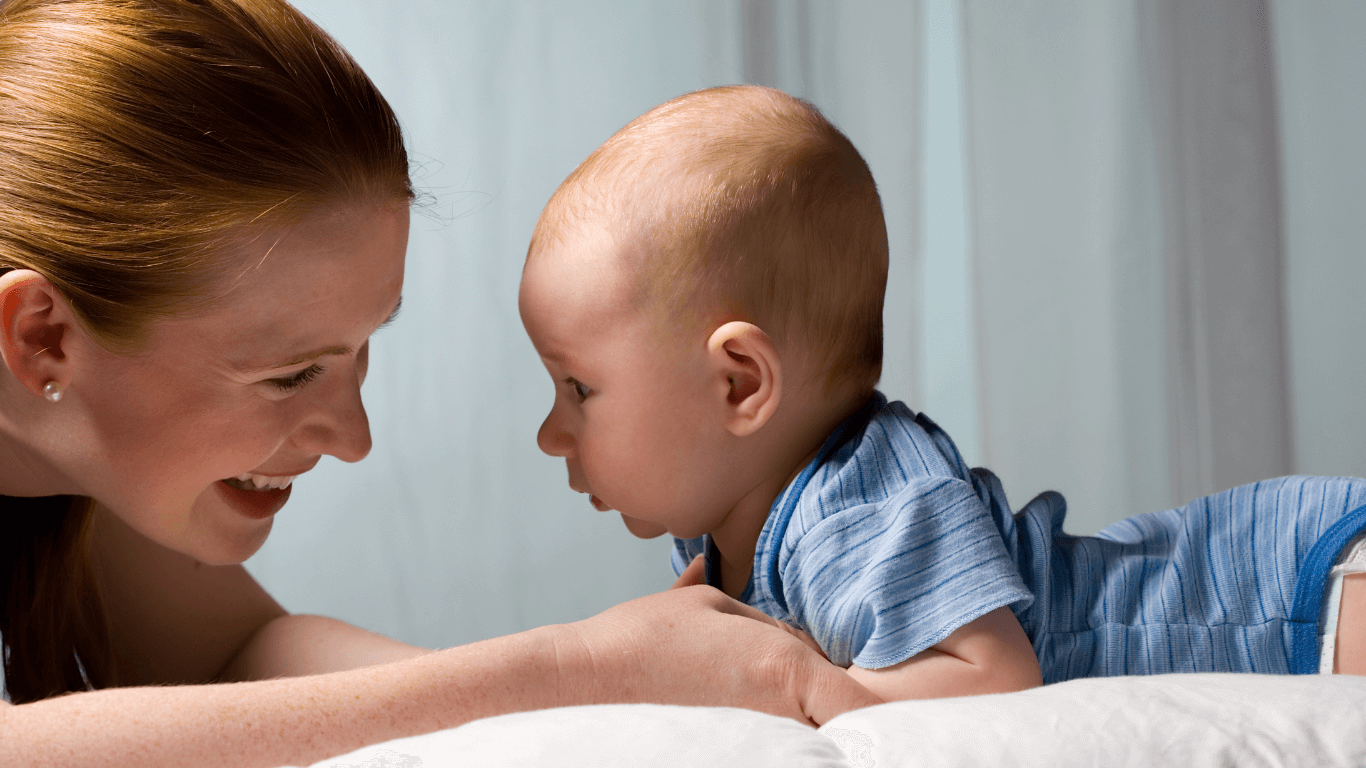
Babies learn language best when they can see your face. Eye contact and facial expressions help babies understand emotions, attention, and social interaction.
When you position yourself so your baby can see you, they are more likely to tune into your voice and focus on communication. This might happen during play, feeding, or when you are responding to their sounds.
You do not need to maintain constant eye contact. Simply being face to face when you talk helps your baby learn that communication involves looking, listening, and responding.
These early interactions lay the groundwork for later conversation skills and social understanding.
Respond to Your Baby’s Sounds and Babbling
Babbling is a key stage of baby language development. When babies coo, babble, or make sounds, they are experimenting with their voice and learning how communication works.
Responding to these sounds shows your baby that their communication matters.
You might:
👶 smile and respond with a sound of your own
👶 repeat the sound they made
👶 pause and wait for them to respond again
This simple back and forth teaches babies about turn taking and listening, which are essential parts of communication.
Even though these exchanges do not involve words yet, they are building the foundations for speech. Babies who experience responsive communication are more likely to continue experimenting with sounds and vocalisations.

4.
Use Everyday Routines to Build Language Skills
Daily routines offer natural opportunities to support language development in babies. Feeding, bath time, getting dressed, and playtime all provide moments for communication.
You can talk about what is happening, name objects, and describe actions as they occur. For example, during a meal you might name the food, describe its texture, or comment on what your baby is doing.
Even if your baby is not speaking, gestures such as pointing, reaching, and facial expressions are all important forms of early communication. Acknowledging these signals helps your baby understand that communication goes both ways.
Routines are especially powerful because they happen every day. Repeated exposure to language in familiar situations helps babies feel secure and supports understanding over time.
5. Name Feelings and Experiences
Babies experience strong emotions long before they have the words to express them. Crying, fussing, and changes in behaviour are all ways babies communicate their needs and feelings.
You can support language development by gently naming emotions and experiences as they happen. This might sound like:
“I can see you are upset. You are tired and you want to be held.”
At this stage, babies are not expected to understand or use emotional language themselves. What matters is that they hear the words alongside comforting actions and a calm voice.
Over time, this exposure helps babies begin to associate words with feelings and experiences, supporting both communication and emotional development as they grow.
Our Final Thoughts
Supporting language development in babies is about connection, consistency, and everyday moments. Talking, listening, responding, and being present all help build a strong foundation for communication.
You do not need to do anything complicated or get it perfect. Small interactions repeated throughout the day have a powerful impact. By creating a language rich environment from birth, you are supporting your baby’s communication skills in a way that will benefit them for years to come.