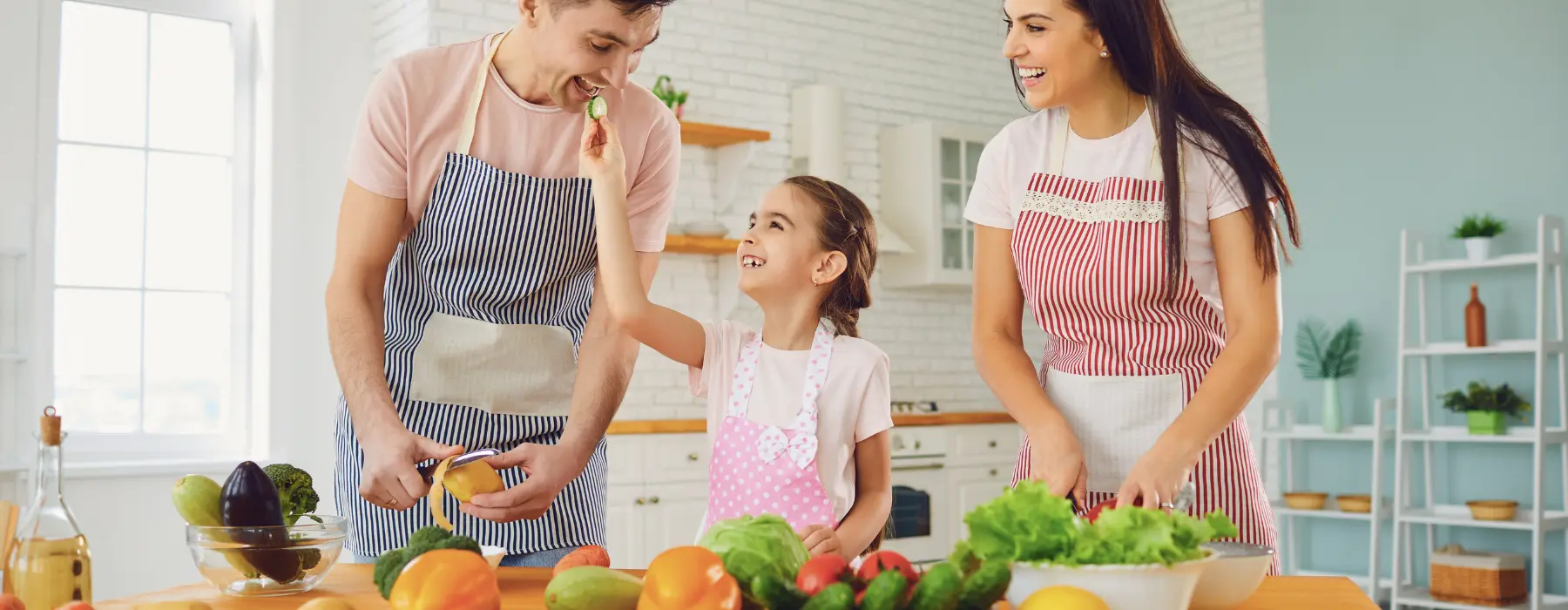
Cooking with children is a wonderful way to build independence and confidence, and it makes family time genuinely fun in the process.
Here are five essential cooking skills for kids, each with step-by-step instructions, practical tips, and a kid-friendly recipe to help your child build real confidence in the kitchen.
These skills are part of the full guide to cooking with kids. If you haven’t already covered the basics, such as handwashing, hot versus cold, and knife safety, take a look at our Ultimate Guide to Cooking with Kids first.
What you’ll find in this post
- 5 hands-on cooking skills, from pouring to rolling dough
- A simple, kid-friendly recipe for each one
- Practical tips to help your child succeed at every stage
- Guidance on when each skill is realistic for your child’s age
The 5 skills
Hands-on skills to build, one recipe at a time
Work through these in any order, and let your child linger on whichever one they enjoy most.
1
Skill one
Pouring liquids safely
Pouring is one of the easiest ways to start building confidence in the kitchen. It teaches hand-eye coordination, patience, and control, and it’s a great entry point before moving on to trickier skills.
- Use a small jug and cups on a tray to catch spills
- Encourage slow, steady pouring using both hands
- Turn practice into a small game to keep it fun
Recipe: Mini Pancakes
Ingredients
- 1 cup self-raising flour
- 1 cup milk
- 1 egg
- 1 teaspoon sugar
- Butter or oil for cooking
Method
- Whisk all ingredients together until smooth
- Pour the batter into a small jug
- Let your child pour carefully into a non-stick pan
- Flip when bubbles appear and cook until golden
2
skill two
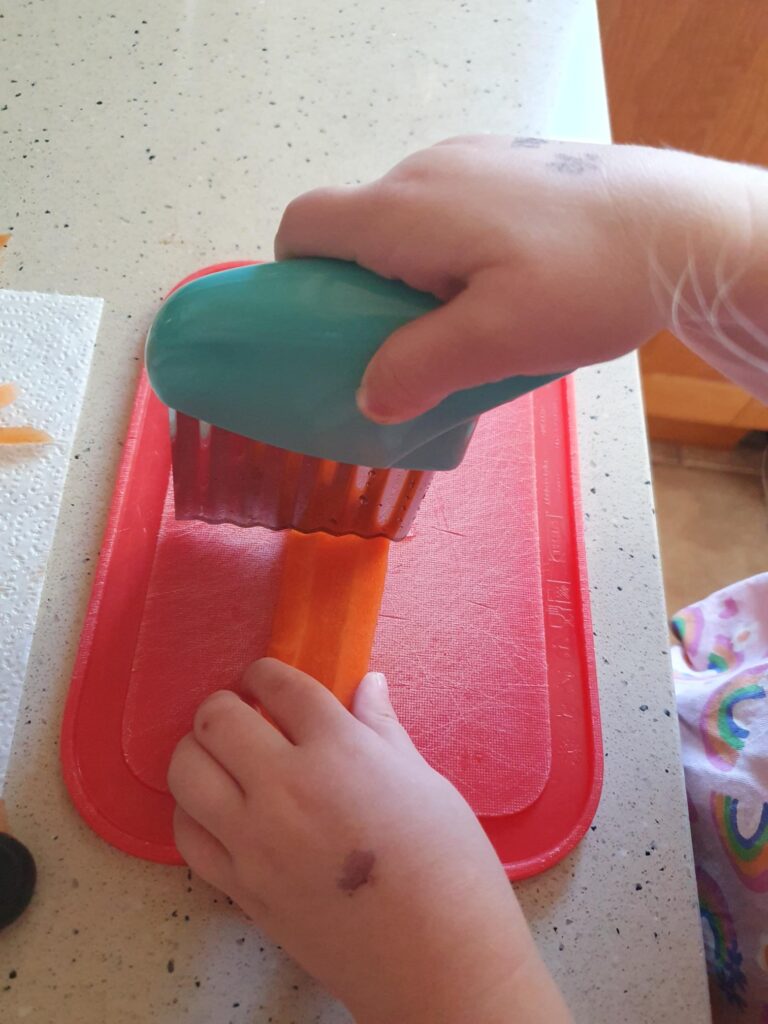
Chopping soft ingredients
Chopping helps develop spatial awareness and hand strength. Starting with soft fruits or vegetables, using a child-safe knife, is the easiest way in.
- Hold the knife in one hand and steady the food with the other
- Keep fingers tucked under, out of the blade’s path
- Gradually introduce firmer ingredients as confidence grows
Recipe: Rainbow Fruit Salad
Ingredients
- 1 banana
- 1 apple
- A handful of grapes, halved
- 1 kiwi
- A handful of berries
Method
- Chop all the fruit into bite-sized pieces
- Arrange by colour in a bowl or on a platter
- Mix gently and serve immediately
3
skill three
Measuring and weighing ingredients
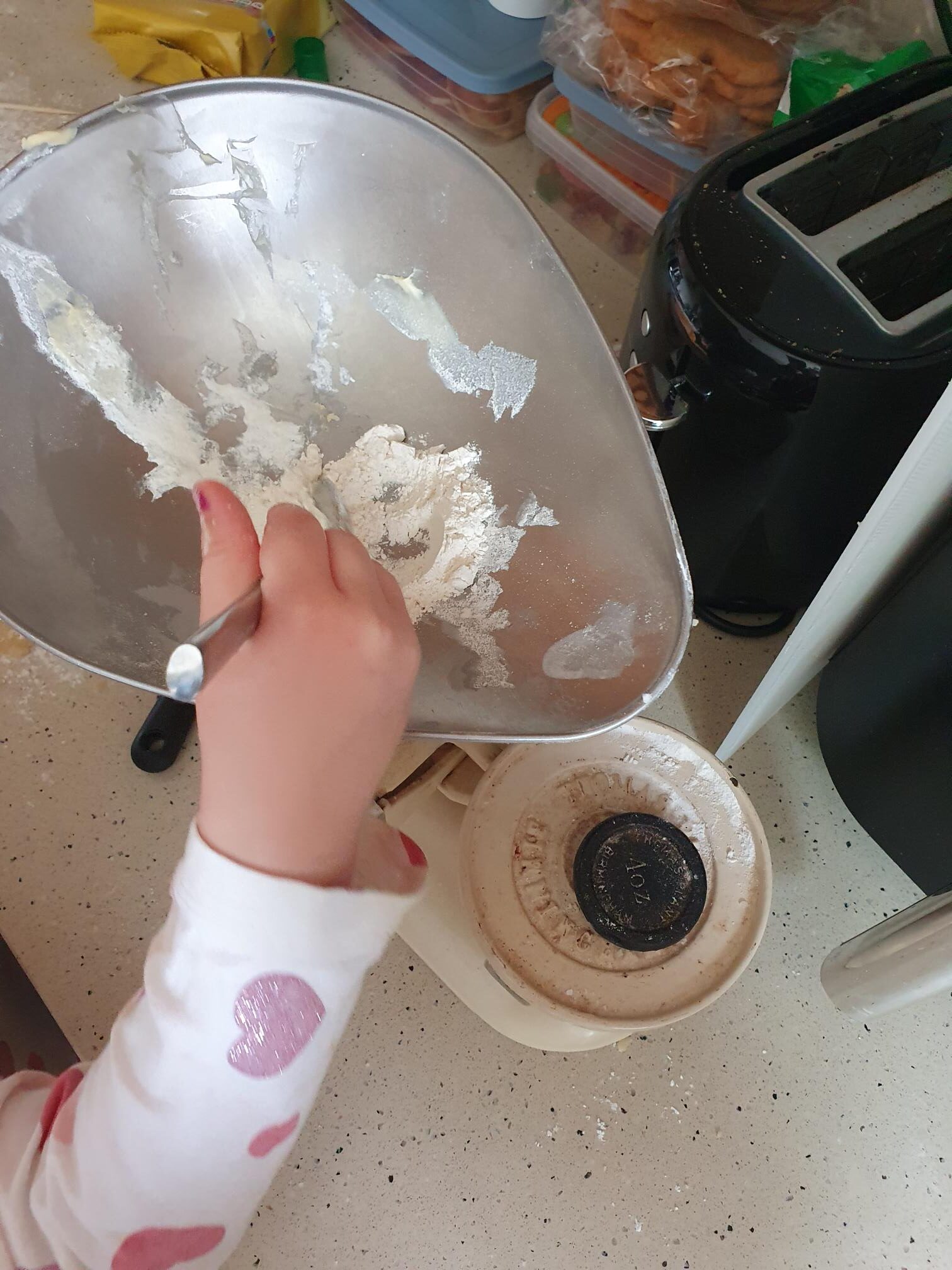
Measuring builds early maths skills, patience, and attention to detail, and it’s one of the most satisfying jobs for children who like a bit of structure.
- Use balance scales for younger children, and cups or spoons for liquids
- Encourage children to read the numbers aloud as they go
- Show them how a recipe changes when ingredients are added in different amounts
Recipe: Chocolate Chip Cookies
Ingredients
- 100g butter, softened
- 75g sugar
- 1 egg
- 150g self-raising flour
- 75g chocolate chips
Method
- Preheat the oven to 180°C
- Let your child measure the ingredients and mix them together
- Roll the dough into small balls and bake for 10 to 12 minutes
4
skill four
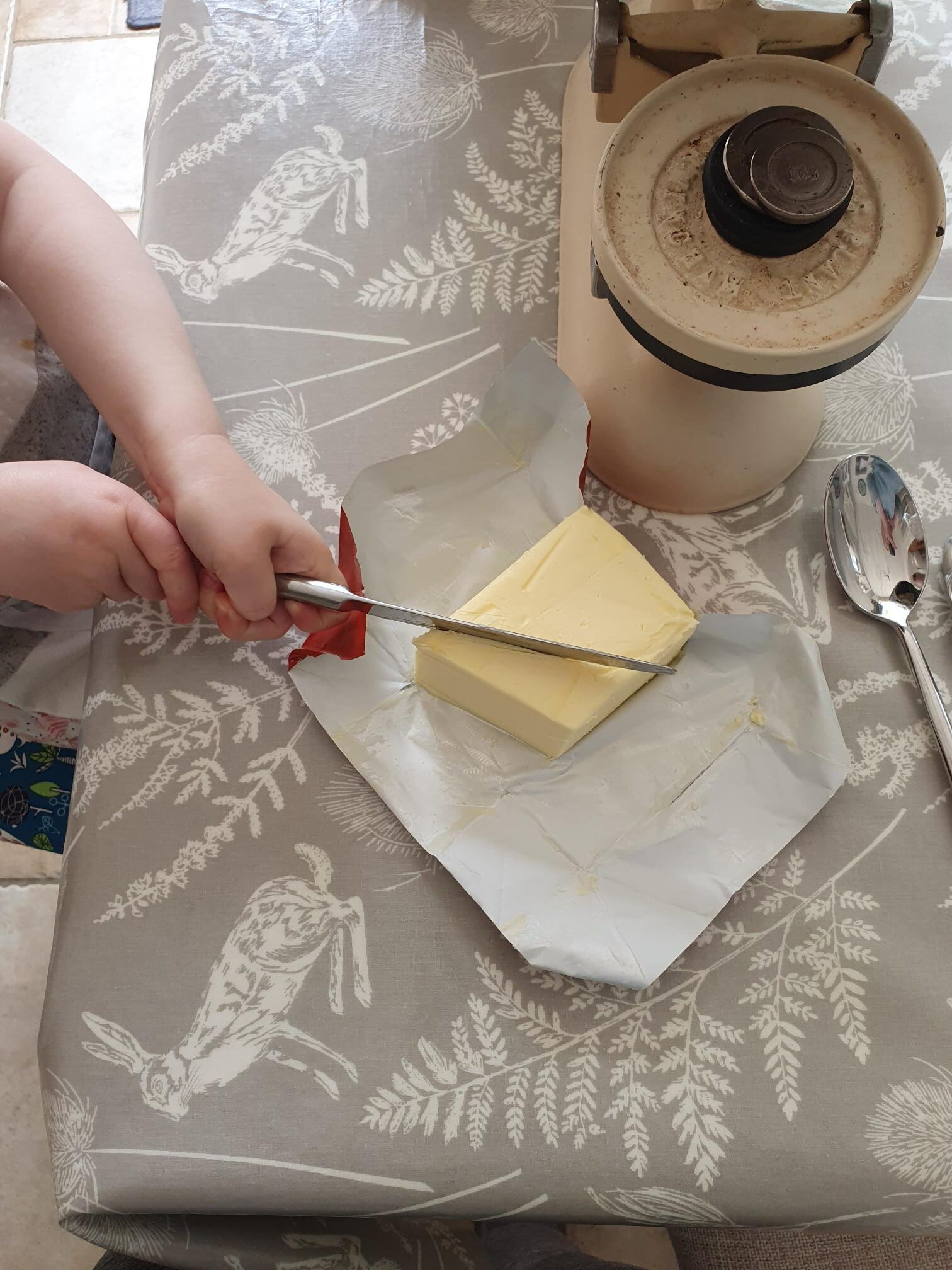
Spreading butter, jam, or sauce
Spreading strengthens fine motor skills and builds independence, and it’s an easy way for younger children to feel properly involved in making a meal.
- Demonstrate how to hold a knife at a slight angle
- Start with soft spreads before progressing to thicker sauces
- Encourage creativity with toppings and combinations
Recipe: Mini Pita Pizzas
Ingredients
- Wholemeal pita breads
- 2 tablespoons tomato sauce per pita
- Grated cheese
- Chopped vegetables, such as peppers, sweetcorn, or mushrooms
Method
- Let your child spread the sauce on the pita
- Sprinkle over the cheese and toppings
- Bake at 200°C for 8 to 10 minutes
5
skill five
Rolling and cutting dough
Rolling dough develops hand strength, coordination, and creativity, and it’s usually the favourite part for most children.
- Use a child-sized rolling pin and small amounts of dough
- Show them how to apply even pressure and turn the dough as they go
- Provide cookie cutters for fun shapes
Recipe: Easy Cookie Cutter Biscuits
Ingredients
- 150g plain flour
- 100g cold butter, cubed
- 50g sugar
- 1 egg yolk
- A few drops of vanilla extract
Method
- Rub the butter and flour together until crumbly
- Mix in the sugar, egg yolk, and vanilla
- Roll out on a floured surface and cut into shapes
- Bake at 180°C for 10 to 12 minutes
Focus on the skill, not the finished plate.
Practising pouring, chopping, measuring, spreading, and rolling gives your child practical skills, real confidence, and a genuine love for food, one recipe at a time.
Not every batch will turn out picture-perfect, and that’s fine. Every wonky biscuit and lopsided pancake is still progress.
Common questions about cooking skills for kids
Written by a parent educator and kitchen safety advocate
Years spent teaching children of all ages to cook, and just as many spent cleaning flour off the ceiling at home, have taught me that readiness beats rushing every time. I write about the practical, honest side of cooking with kids.