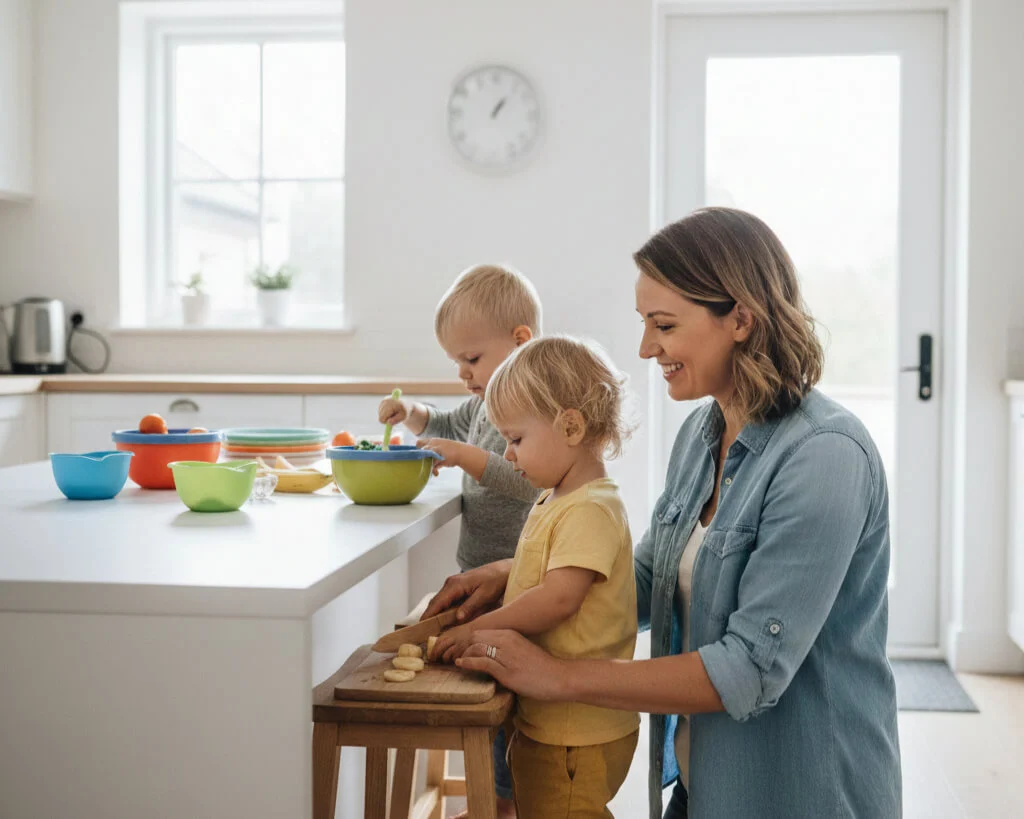
You’ve decided it’s time to let your child loose in the kitchen — and somewhere between the excitement and the mess you’re already picturing, a small voice is asking: is my child actually ready for this?
Cooking with kids is one of the most rewarding ways to spend time together. But before the flour goes flying or the cookie cutters come out, there’s a bit of groundwork worth doing first.
Getting your child “kitchen ready” isn’t about a formal lesson. It’s a handful of simple habits and rules that make every cooking session afterwards safer, calmer, and genuinely more enjoyable for both of you. Think of this as what happens before the recipe: the foundations that let your child join in with confidence, not chaos.
What you’ll find in this post
- The 5 things to establish before your child starts cooking
- Simple age guidelines for what’s realistic at each stage
- Practical ways to introduce kitchen rules without it feeling like a lecture
- Where to go next once your child is kitchen-ready
First: build the foundations, not just the fun
It’s tempting to jump straight to the fun stuff: cracking eggs, decorating cupcakes, rolling dough into shapes. You’ll get there. But a few minutes spent on the basics below means fewer spills, fewer “put that down” moments, and a child who genuinely understands why we do things a certain way in the kitchen, rather than just being told no.
Handwashing before anything else touches food
A clear, consistent signal for “hot”
Tasks matched to your child’s age
Knife rules learned before knives are used
The 5 points
What to teach before the cooking begins
Get these in place, and every recipe afterwards will go far more smoothly.
1
point one
Handwashing and basic hygiene
This is always the starting point, every single time, no exceptions. Before touching any food, hands get washed, and it’s worth explaining why rather than just enforcing it.
- Make it part of the “arriving in the kitchen” routine, before anything else happens
- Explain simply: “we wash our hands so we don’t share germs with our food”
- Keep a step stool by the sink so younger children can reach independently
2
point two
Understanding hot vs cold, and what not to touch
Children don’t instinctively know an oven door is hot or that a pan handle can burn. This needs to be taught directly, calmly, and repeated often.
- Point out hot surfaces clearly: “the oven is hot, we don’t touch it”
- Use a consistent word or signal, like “hot!”, so it becomes automatic
- Let them feel gentle warmth from a safe distance, like steam, so “hot” has real meaning
3
point three
Age-appropriate expectations
One of the biggest causes of kitchen frustration, for parents and children alike, is expecting too much too soon. What’s realistic changes a lot between ages 2 and 8.
- Ages 2–3: washing vegetables, tearing lettuce, stirring with help
- Ages 4–5: pouring, spreading, measuring under supervision
- Ages 6–8: using a child-safe knife on soft foods, cracking eggs, using a hand mixer
4
point four
Basic knife and tool safety
Long before a child holds a real knife, they can learn the rules that will matter once they do: how to hold it, why we keep fingers tucked under, and why we never walk around holding one.
- Start with a child-safe knife on soft fruits, well before anything sharper
- Teach the “claw grip”: fingers curled under, guiding rather than gripping the food
- Set a clear rule: knives stay at the chopping board, always, never carried around
5
point five
Cleaning up as part of cooking, not an afterthought
Teaching a child that cooking includes tidying up, wiping surfaces, putting ingredients away, washing utensils, builds respect for the space and makes the whole experience feel complete, rather than something a parent finishes alone.
- Give them one small clean-up job each time, even if it’s just wiping their own space
- Frame it as part of the activity, not a punishment or chore tacked on the end
- Let them see you doing it too, so it feels like teamwork rather than a rule
They don’t need to get it perfect. They just need to get comfortable.
Spilled flour and wonky pouring are part of the process, not a sign something’s gone wrong. Once these five foundations feel natural, real cooking sessions will go so much more smoothly, because the groundwork is already there.
What matters most at this stage isn’t skill. It’s confidence, safety habits, and a child who feels like a genuine part of what’s happening in the kitchen.
Common questions about kitchen safety and readiness
Written by a parent educator and kitchen safety advocate
Years spent teaching children of all ages to cook, and just as many spent cleaning flour off the ceiling at home, have taught me that readiness beats rushing every time. I write about the practical, honest side of cooking with kids.