
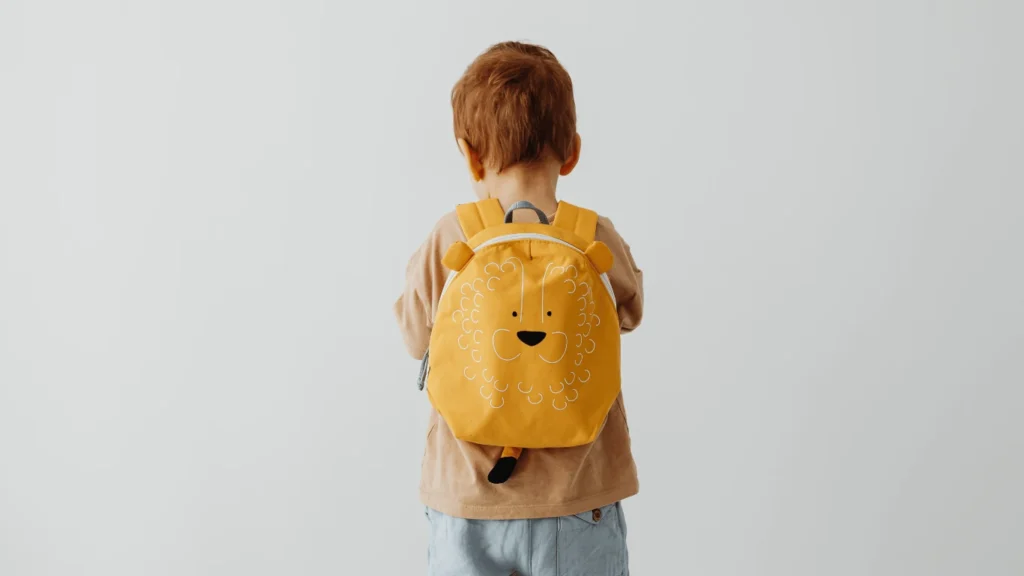
Your child has their school place. The uniform is ordered. And somewhere in the middle of all that excitement, you’ve noticed it — a little wobble. A few too many questions about what school will be like. Maybe some tears at bedtime.
School anxiety in children starting Reception is one of the most common concerns I hear from parents — and one of the most natural. I’d be more surprised if a four or five-year-old didn’t feel some nervousness about starting somewhere completely new, with people they’ve never met, doing things they’ve never done before.
As both a mum and a primary school teacher, I’ve sat on both sides of this. I’ve watched children go through the gates on their first morning looking terrified — and by the end of that same week, skip in without a backward glance. The anxiety is real, but it is almost always temporary. And there is a lot you can do between now and September to help.
What you’ll find in this post
- 5 practical ways to ease school anxiety before it starts
- How to talk to your child about their worries without making them worse
- What teachers wish parents knew about the first few weeks
- When to seek extra support — and when to trust the process
First: understand where the anxiety is coming from
Almost all school anxiety in young children comes from one place: the unknown. Children are being asked to walk into an entirely unfamiliar world — new adults, new routines, new children, new rules — without any real picture of what to expect. That uncertainty is what makes it feel scary.
It’s also worth knowing that anxiety doesn’t always look like crying. Watch for these signs in the weeks before school starts:
The 5 Strategies
How to help your child feel ready
These aren’t quick fixes — they’re small, consistent steps that build confidence over time.
1
Strategy one
Make the unknown, known
The single most effective thing you can do is replace uncertainty with familiarity. Visit the school before September if you can — walk around the outside, find the gate they’ll go in, look at the playground. Many schools now publish virtual tours on their website; watch them together. The more your child can picture where they’re going, the less frightening it feels.
- Visit the school grounds and point out key landmarks: the gate, the entrance, the playground
- Watch the school’s virtual tour or any welcome videos from their teacher together
- Talk through what a typical school day might look like, step by step
2
Strategy two
Talk about feelings — without overdoing it
It’s tempting to either avoid the subject entirely (“it’ll be fine, don’t worry!”) or bring it up so often that you inadvertently signal there’s something to worry about. The goal is to create natural, low-pressure opportunities for your child to share how they’re feeling — and to validate what they say without amplifying it.
- Acknowledge worries without dismissing them: “It makes sense that feels a bit scary. It’s something brand new.”
- Share a time you felt nervous about something new — and what helped
- Avoid the phrase “don’t worry” — it doesn’t work, and it can make children feel unheard
- Remind them that the adults at school are there to help them with exactly this
3
Strategy three
Read books about starting school together
Stories are one of the most powerful tools we have for helping children process big emotions — because they do it at a safe distance. A character in a book feels nervous about school, finds their way through it, and everything works out. That narrative plants a seed: this is something that can be navigated. It also opens the door for natural conversation without it feeling like a formal “chat about school”.
- The Invisible String by Patrice Karst — for children who struggle with separation
- Starting School by Janet and Allan Ahlberg — a warm, gentle classic
- Funnybones Go to School — brilliant for making school feel fun and unthreatening
- Visit your local library — the children’s librarian will have brilliant recommendations
- Check out our children’s read aloud YouTube channel for a variety of books
4
Strategy four
Practise the morning routine before September
Chaotic mornings make anxious children more anxious. When everything feels rushed and stressful at drop-off, it’s much harder for children to separate calmly. Starting a school-style morning routine a few weeks before term begins — getting up at the same time, getting dressed, having breakfast at a consistent pace — takes the shock out of those first few mornings in September.
- Shift bedtime and wake-up time gradually in the weeks before school starts
- Prepare as much as possible the night before: bag packed, uniform laid out
- Create a simple morning checklist your child can follow — it builds independence and reduces nagging
- Practise a goodbye ritual: a special handshake, a hug, a phrase — something consistent they can rely on
5
Strategy five
Give them a small piece of home to take with them
A comfort object — a tiny keyring on their school bag, a small family photo tucked into a pocket, a special pebble from home — can provide real emotional security for young children navigating a big new environment. It works as a physical reminder that home and family are still there, even when they can’t see them. Many Reception teachers quietly encourage this in the first few weeks.
- A small photo of your family inside their bag or lunchbox lid works beautifully
- A keyring on their school bag gives them something to hold during transitions
- You can also create a “connection ritual” — something like “I’ll be thinking about you at lunch” gives them a moment to anchor to during the day
It’s okay if the first few mornings are hard. That’s not failure — it’s normal.
Even with all the preparation in the world, some children cry at the gate. Some cling. Some go in absolutely fine and save the tears for home time. All of it is normal, and none of it means you’ve done something wrong.
The children who walk in on day one and never look back? They were anxious too — they just showed it differently. What matters most is that they feel loved, safe, and trusted to cope.