
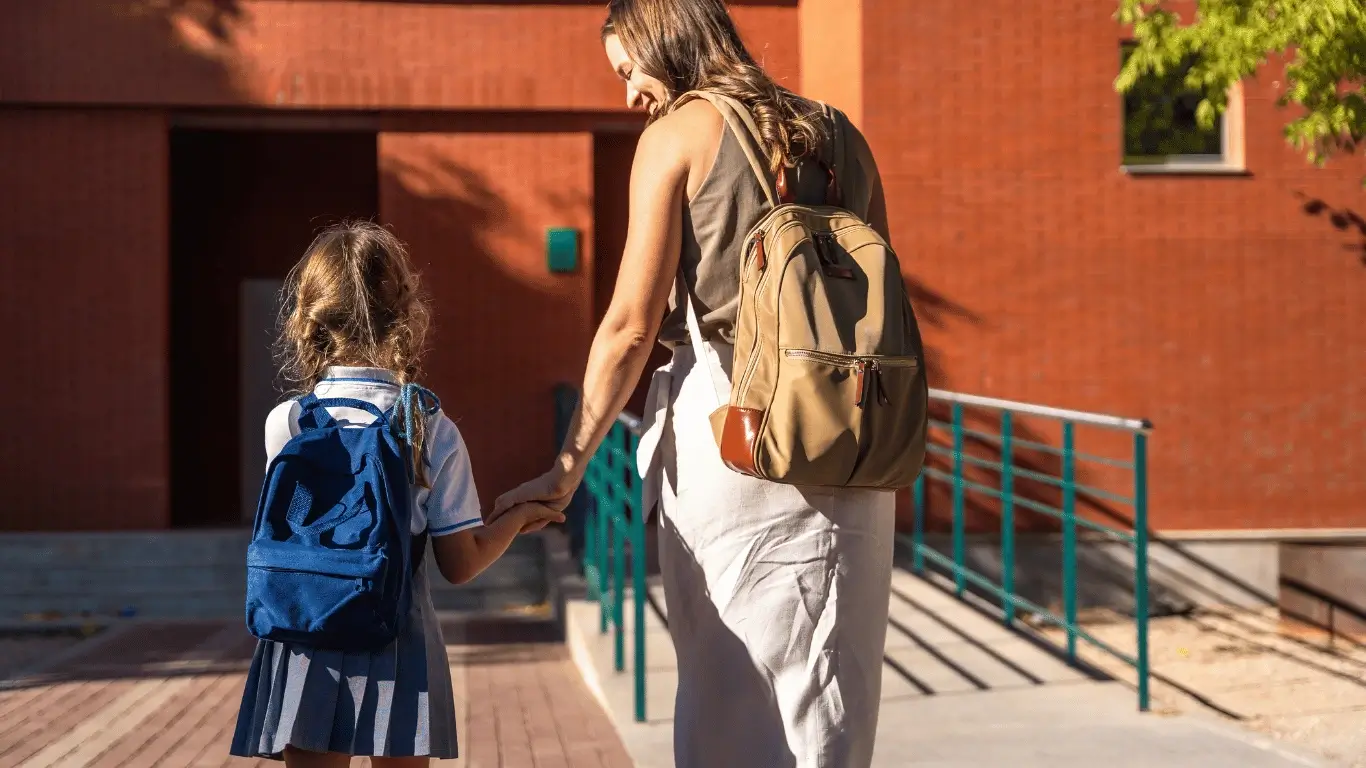
You’ve found out where your child is starting school this September — and somewhere between the excitement and the pride, a small voice is probably asking: “But are they ready?”
As both a mum and a primary school teacher, I hear this question all the time. And the answer is almost always: more ready than you think.
Here’s the thing parents often don’t realise — children don’t need to be reading, writing, or counting before they walk through those gates. What truly sets children up for a smooth, happy start are independence skills, self-care basics, and emotional readiness. These are the things that actually make a difference in a busy Reception classroom.
What this post covers
- The 5 school readiness skills that matter most
- Simple, realistic ways to practise them at home
- What Reception teachers actually wish parents knew
- How to ease school anxiety before September
First: help your child feel ready, not just be ready
A lot of school anxiety — in children and parents — comes from the unknown. Children hear about “big school” for months, but often have no real picture of what it looks, sounds, or feels like. That uncertainty is what makes it feel scary.
These simple steps can make an enormous difference before term even starts:
The 5 skills
What to practise before September
Focus on these, and you’ll be giving your child the very best start.
Skill one
Walk (or drive) the route to school
This is one of the most underrated school readiness tips — and one of the most effective. Walking the route before term starts helps your child build a mental picture of the journey, the gates, and where they’ll go in. That familiarity alone can dissolve a surprising amount of anxiety.
- Point out the school building, the entrance, and any landmarks along the way
- Let them lead the route if they’re ready — it builds ownership and confidence
- Try it at the time you’ll actually be leaving each morning
Skill two
Getting dressed — including their shoes
Being able to put on their school uniform independently is one of the most practical skills your child can have. In a class of up to 30 children, a teacher simply can’t check every child’s shoes or help everyone into their jumper — especially during PE or outdoor play transitions.
- Practise getting fully dressed each morning during the summer holidays
- Put a half-sticker inside each shoe to help them remember left from right
- Start with school-style clothes so uniform doesn’t feel unfamiliar
Skill three
Zipping up their coat
It sounds small. In a Reception classroom, it’s a big deal. A child who can zip their own coat can get outside to play independently — without waiting, without frustration, and without needing an adult. Zipping is genuinely one of the most common things teachers spend time helping with.
- Choose coats with larger, easier zips when buying school outerwear
- Make it a game — time them, cheer them on
- Avoid toggles and fiddly fastenings if possible at this stage
Skill four
Following simple one-step instructions
School life is built around instructions. “Put your bag away.” “Come and sit on the carpet.” “Get your coat.” These seem simple — but for children not used to listening and responding independently, they can be genuinely overwhelming. Building this skill at home makes the transition so much smoother.
- Use clear, one-step instructions at home: “Please put your shoes by the door”
- Praise follow-through genuinely — it reinforces the habit
- Play simple listening games like Simon Says to make it fun
Skill five
Using the toilet independently
This one matters enormously for a child’s dignity and confidence at school. Children should ideally be able to get themselves to the toilet, manage their clothing, wipe (as best they can), and wash and dry their hands — all without needing adult prompting each time.
- Practise the full routine: toilet → wipe → clothes back on → wash and dry hands
- Encourage them to do this without prompting, so it becomes habit
- Make sure school trousers or skirts are easy for them to manage themselves
They don’t need to master all of this. They just need to have tried.
Reception teachers are there to teach and support these skills — not receive children who already have them perfectly. What matters is exposure, practice, and encouragement.
Every child develops at their own pace. And as a teacher, I can honestly say: what matters most isn’t academic ability. It’s confidence, independence, and feeling secure.