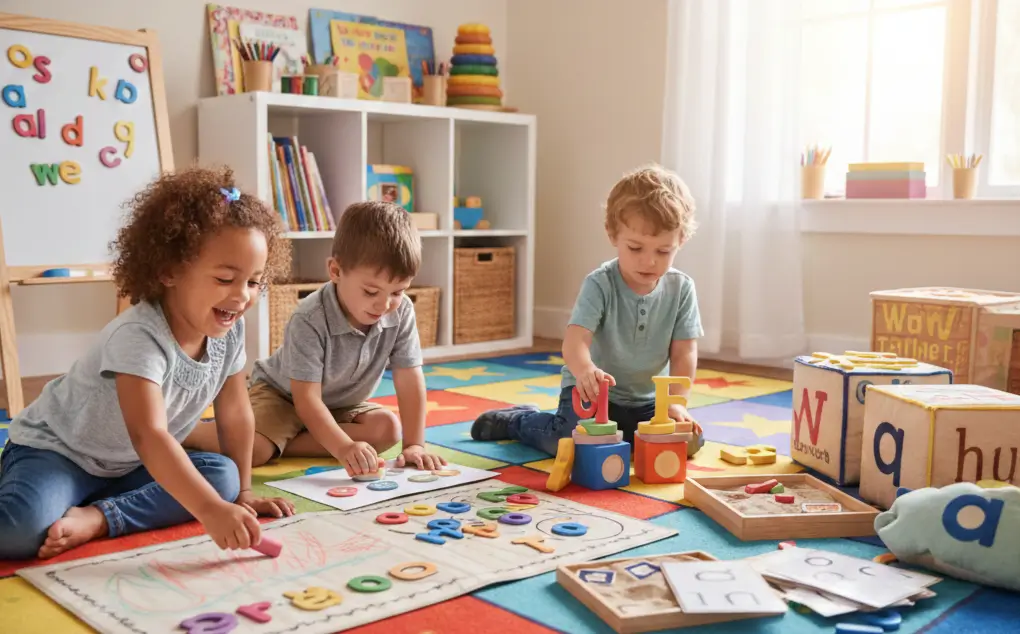
Writing does not begin with neat letters on paper. It begins much earlier, with movement, strength, coordination and confidence.
As a parent who has also worked in early years education, I completely understand the pressure around writing. It can feel like one of those big milestones that suddenly matters a lot once preschool or Reception is on the horizon.
Before a child can control a pencil, they need strong shoulder muscles, stable core strength, good hand control, and an understanding of how shapes and lines work together to form letters. When we focus on playful foundations instead of perfect results, children develop the skills naturally, and with far less frustration. If you’re after a broader range of play-based ideas beyond writing, our guide to 5 fun activities for toddlers and preschoolers covers sensory play, creative activities and discovery learning too.
What this post covers
- 5 playful games that build real pre-writing foundations
- Why movement and strength matter more than neat letters at this stage
- Simple setups using things you likely already have at home
- Answers to the early writing and pencil grip questions parents ask most
Why foundations matter more than neat handwriting
Every letter a child will ever write depends on skills that have nothing to do with a pencil: shoulder strength for control, core stability for sitting upright, hand strength for grip, and an understanding of how lines and curves fit together.
Build these foundations through play first, and neat letters tend to follow with far less frustration on both sides.
Shoulder and core strength for pencil control
Hand strength and a natural tripod grip
Awareness of letter shapes, lines and direction
Confidence that comes from low-pressure practice
The 5 games
5 games to build writing foundations
Play these before you worry about neat letters — the neat letters tend to follow.
1
Game one
Giant floor letter formation
If your child struggles with small pencil movements, the answer is often to go bigger first. Writing starts from the shoulder, not just the fingers.
- Builds letter formation awareness and directionality
- Strengthens gross motor control, core and shoulders
- Whole-arm movement builds muscle memory without a pencil in sight
2
game two
Air writing with sounds
One of the most effective classroom strategies, because it combines movement and phonics — and it removes the pressure of paper and pencil entirely.
- Links phonics and sound recognition to letter formation
- Builds memory recall through multiple senses at once
- Removes paper-and-pencil pressure that can cause resistance
3
game three
Whiteboard name practice
A child’s name is often the most motivating word they’ll ever learn to write — and a whiteboard makes mistakes forgiving, which lowers anxiety fast.
- Builds name recognition and correct letter sequencing
- Develops pencil control through repetition
- Repetition on a wipeable surface builds confidence and independence
4
Game four
Pattern and shape challenges
Every letter is made up of lines and curves. Master the shapes first, and letter formation becomes far less overwhelming.
- Builds fine motor control and visual tracking
- Develops hand-eye coordination for pre-writing
- Enjoys tactile play too? See our mess-free sensory activities for toddlers and preschoolers
5
game five
Pencil grip and hand strength games
Sometimes writing difficulties aren’t about understanding letters at all — they’re about weak hand muscles or an awkward grip. Strong fingers make writing feel physically easier.
- Builds hand strength, tripod grip and finger isolation
- Develops the writing stamina longer sessions need
- When it feels physically easier, confidence follows quickly
Early writing should feel playful, not pressured
As both a parent and an early years teacher, I’ve seen how much smoother handwriting becomes when we focus on strength, movement and formation awareness first. Children who build these foundations tend to approach writing with confidence rather than hesitation — it’s not just about letters on a page, it’s coordination, readiness, and belief in their own ability.
For more playful ideas that support development in other areas, see our EYFS sensory dough guide or our outdoor art activities guide.
Common questions about early writing skills
Written by a mum & primary school teacher
With years in the classroom and plenty of trial and error at home, I write about the practical, honest side of early childhood — activities that genuinely work, not just ones that photograph well.