

Cooking with children is a wonderful way to encourage independence and confidence while making family time fun. Here are five essential cooking skills for kids with step-by-step instructions, tips and kid-friendly recipes to help children gain confidence in the kitchen.
These skills are part of the full guide to cooking with kids. For safety tips planning and more activities see our Ultimate Guide to Cooking with Kids.
Pouring Liquids Safely
Pouring teaches hand-eye coordination patience and control. Start with water before moving to thicker liquids like pancake batter or smoothies.
Tips for Parents
🥞 Use a small jug and cups on a tray to catch spills.
🥞 Encourage slow steady pouring using both hands.
🥞 Make it fun by turning practice into a small game.
Recipe: Mini Pancakes
🥞 1 cup self-raising flour
🥞 1 cup milk
🥞 1 egg
🥞 1 teaspoon sugar
🥞 Butter or oil for cooking
Instructions
🥞 Whisk all ingredients until smooth.
🥞 Pour into a small jug.
🥞 Let your child pour carefully into a non-stick pan.
🥞 Flip when bubbles appear and cook until golden.
2.
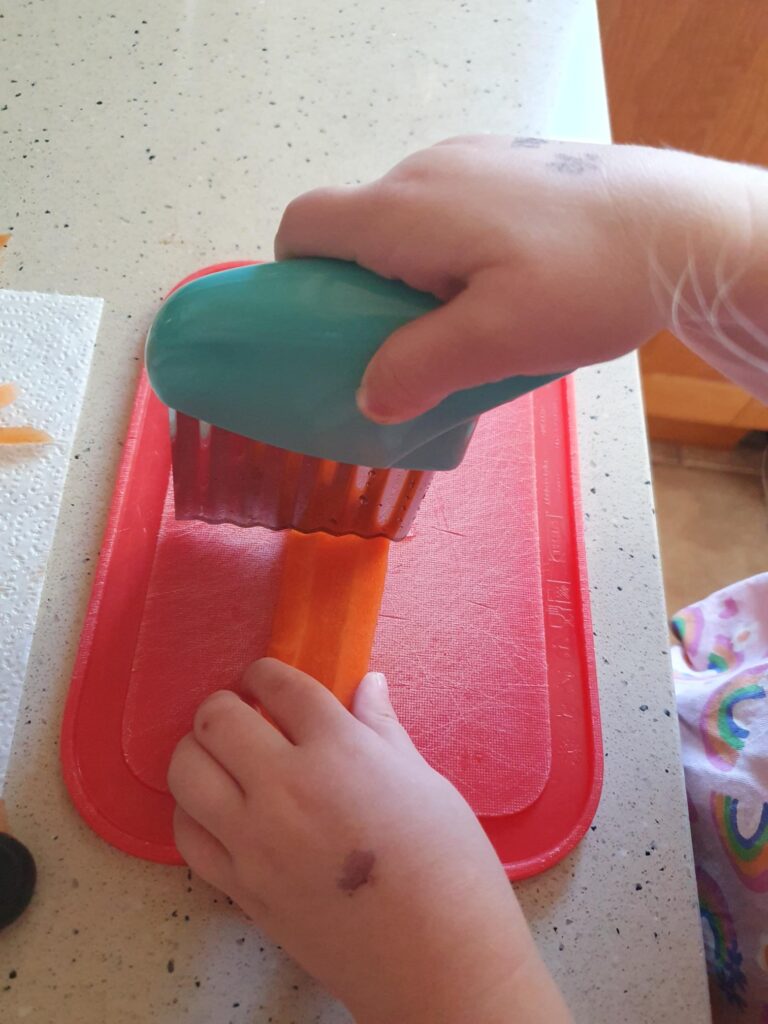
Chopping Soft Ingredients
Chopping develops spatial awareness and strength. Start with soft fruits or vegetables using child-safe knives.
Tips for Parents
🍓Hold knife in one hand and steady food with the other.
🍓 Keep fingers tucked under.
🍓 Gradually introduce more challenging ingredients as confidence grows.
Recipe: Rainbow Fruit Salad
🍓 1 banana
🍓 1 apple
🍓 A handful of grapes halved
🍓 1 kiwi
🍓 A handful of berries
Instructions
🍓 Chop all fruit into bite-sized pieces.
🍓 Arrange by colour in a bowl or on a platter.
🍓 Mix gently and serve immediately.
Measuring and Weighing Ingredients
Measuring ingredients builds early math skills patience and attention to detail.
Tips for Parents
🧁 Use balance scales for younger children and cups or spoons for liquids.
🧁 Encourage children to read numbers aloud.
🧁 Show how ingredients affect recipes when added in different amounts.
Recipe: Chocolate Chip Cookies
🧁 100 grams butter softened
🧁 75 grams sugar
🧁 1 egg
🧁 150 grams self-raising flour
🧁 75 grams chocolate chips
Instructions
🧁 Preheat oven to 180 degrees Celsius.
🧁 Let your child measure ingredients and mix.
🧁 Roll dough into small balls and bake 10 to 12 minutes.
4.
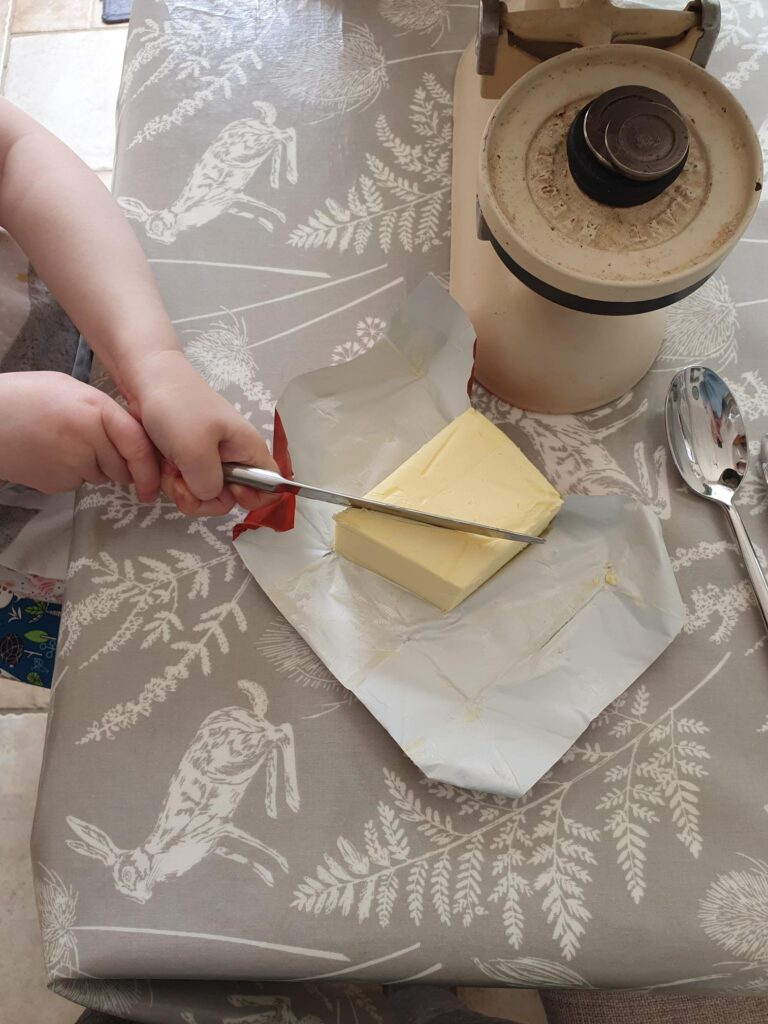
Spreading Butter Jam or Sauce
Spreading strengthens fine motor skills and builds independence.
Tips for Parents
🧈 Demonstrate how to hold a knife at a slight angle.
🧈 Start with soft spreads before progressing to thicker sauces.
🧈 Encourage creativity with toppings and combinations.
Recipe: Mini Pita Pizzas
🧈 Wholemeal pita breads
🧈 2 tablespoons tomato sauce per pita
🧈 Grated cheese
🧈 Chopped vegetables such as peppers sweetcorn or mushrooms
Instructions
🧈 Let your child spread sauce on the pita.
🧈 Sprinkle cheese and toppings.
🧈 Bake at 200 degrees Celsius for 8 to 10 minutes.
5. Rolling and Cutting Dough
Rolling dough develops hand strength coordination and creativity.
Tips for Parents
🍰 Use a child-sized rolling pin and small amounts of dough.
🍰 Show how to apply even pressure and turn the dough.
🍰 Provide cookie cutters for fun shapes.
Recipe: Easy Cookie Cutter Biscuits
🍰 150 grams plain flour
🍰 100 grams cold butter cubed
🍰 50 grams sugar
🍰 1 egg yolk
🍰 A few drops of vanilla extract
Instructions
🍰 Rub butter and flour together until crumbly.
🍰 Mix in sugar egg yolk and vanilla.
🍰 Roll out on a floured surface and cut shapes.
🍰 Bake at 180 degrees Celsius for 10 to 12 minutes.
Our Final Thoughts
Focusing on these five cooking skills allows children to develop practical skills confidence and a love for food. By practicing pouring chopping measuring spreading and rolling your child will be ready for more advanced cooking projects.