While researching a P.E. lesson for my Reception class, I came across a term I’d never heard before: “container baby.” The more I read, the more it made sense.
Many babies spend a large part of their day in some kind of container, such as car seats, bouncers, swings, Bumbo seats or highchairs. These items hold babies safely in one position, but they don’t give them the chance to build their own core strength.
Over the years I’ve taught many children who struggle to sit on the floor or join in games on the carpet, simply because their bodies aren’t quite ready for it yet. With a few small changes at home, you can help your baby or toddler build the strength and coordination they need, without any special equipment or formal exercises.
What you’ll find in this post
- What “container baby syndrome” is, and why it matters
- The signs that suggest your baby might need more floor time
- 5 simple, everyday ways to help build core strength
- Links to more detailed guides for tummy time and floor play
Signs your baby or toddler might need more floor time
Every baby develops at their own pace, and this isn’t about spotting a problem. But a few common signs can suggest a child’s core muscles could use a little more practice.
Sitting in a “W” shape rather than cross-legged
Tiring quickly during floor play or tummy time
Avoiding or resisting time on the floor
Struggling to sit unsupported for their age
The 5 ways
Simple ways to build core strength at home
You don’t need to do them all at once, pick one to start with today.
1
Way one
Tummy time, at any age
Tummy time is often talked about for very young babies, but older babies and toddlers benefit from it too. Encourage them to read a book, colour in, or play a game while lying on their tummy. Drawing on large sheets of paper works brilliantly and helps build the muscles needed for sitting comfortably at a table later on.
- Start with just a few minutes and build up gradually
- Get down on the floor with them, face to face, to keep them engaged
- For more ideas, see our full guide: 5 Ways to Make Tummy Time Easier and More Enjoyable
2
Way two
Sitting cross-legged on the floor
Sitting cross-legged looks simple, but many children find it surprisingly difficult. Those with weaker core muscles often slide into a “W” position instead, with their legs bent out behind them, because it gives them a wider, more secure base.
- Encourage cross-legged sitting during puzzles, stories or building with toys
- Gently guide their legs into position rather than correcting repeatedly
- The more they practise, the easier and stronger it becomes
3
Way three
Crossing the centre line
This can sound complicated, but it’s easy to put into practice. Imagine a line running down the middle of your child’s body, and another running across it. When they reach across those lines with their arms or legs, it helps build strong connections in the brain that support coordination and learning.
- Try touching opposite toes together
- Pass toys from one hand to the other, across the body
- Reach for objects placed slightly to the opposite side
4
Way four
Spread toys out of reach
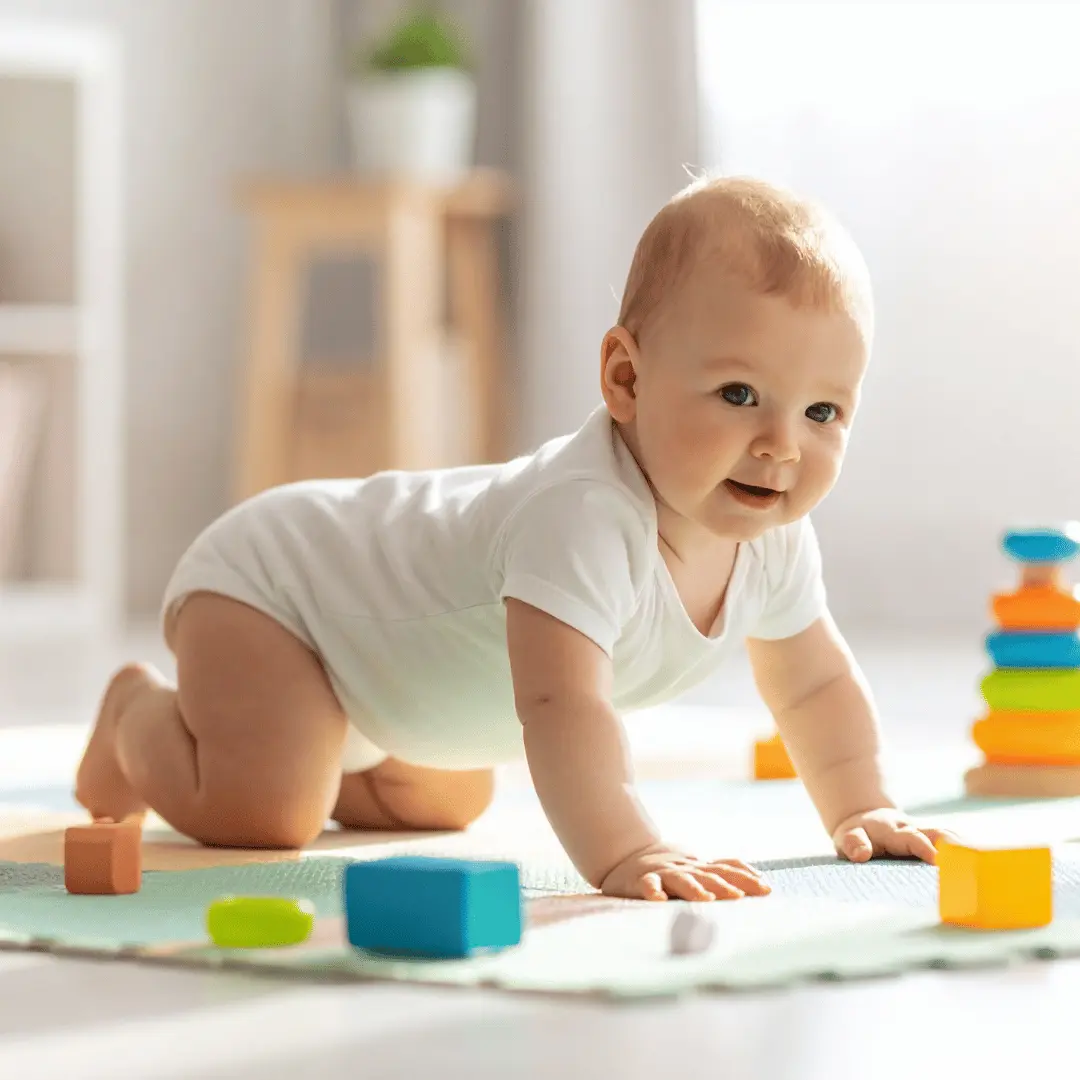
This tip works especially well for younger babies who aren’t walking yet. Instead of placing toys within easy reach, spread them out slightly so your baby has to stretch, wriggle or shuffle towards them. These small movements help build the muscles needed for rolling, crawling, pulling to stand, and eventually walking.
- Place favourite toys just out of arm’s reach
- Vary the direction so they twist and turn, not just reach forward
- For babies not yet mobile, see: 5 Safe and Simple Floor Play Ideas for Babies Who Aren’t Mobile Yet
5
Way five
Move to music
Who doesn’t love a little dance party? Music is a powerful tool for development. Singing nursery rhymes supports early language and literacy, while dancing helps with rhythm, balance and coordination.
- Turn on a favourite song and get down on the floor with them
- Try simple actions songs that involve reaching, clapping or stretching
- See also: 5 Powerful Benefits of Nursery Rhymes for Early Childhood Development
Small, everyday moments add up to real strength.
There are so many simple ways to help your baby move more, often without them even realising it. Containers like car seats, bouncers and highchairs still have their place, it’s just about balancing that time with plenty of chances to stretch, wriggle and explore.
More in this series
Each guide below goes deeper into one area of baby development. This page is updated as new guides are added.
Signs of a Weak Core: What to Look For (and What Helps)
Coming soonGross Motor Milestones: What to Expect and When
Coming soonCommon questions about baby core strength
Written by a mum & primary school teacher
With years in the classroom and a family of my own, I write about the practical, honest side of early childhood, because parents deserve real information, not just reassurance.