
 In partnership with Snuggle & Sleep
Baby Sleep on Holiday: Naps, Jet Lag & Safe Sleep, Sorted
A sleep consultant’s honest, practical guide to keeping your baby settled and safe — without needing a perfect routine.
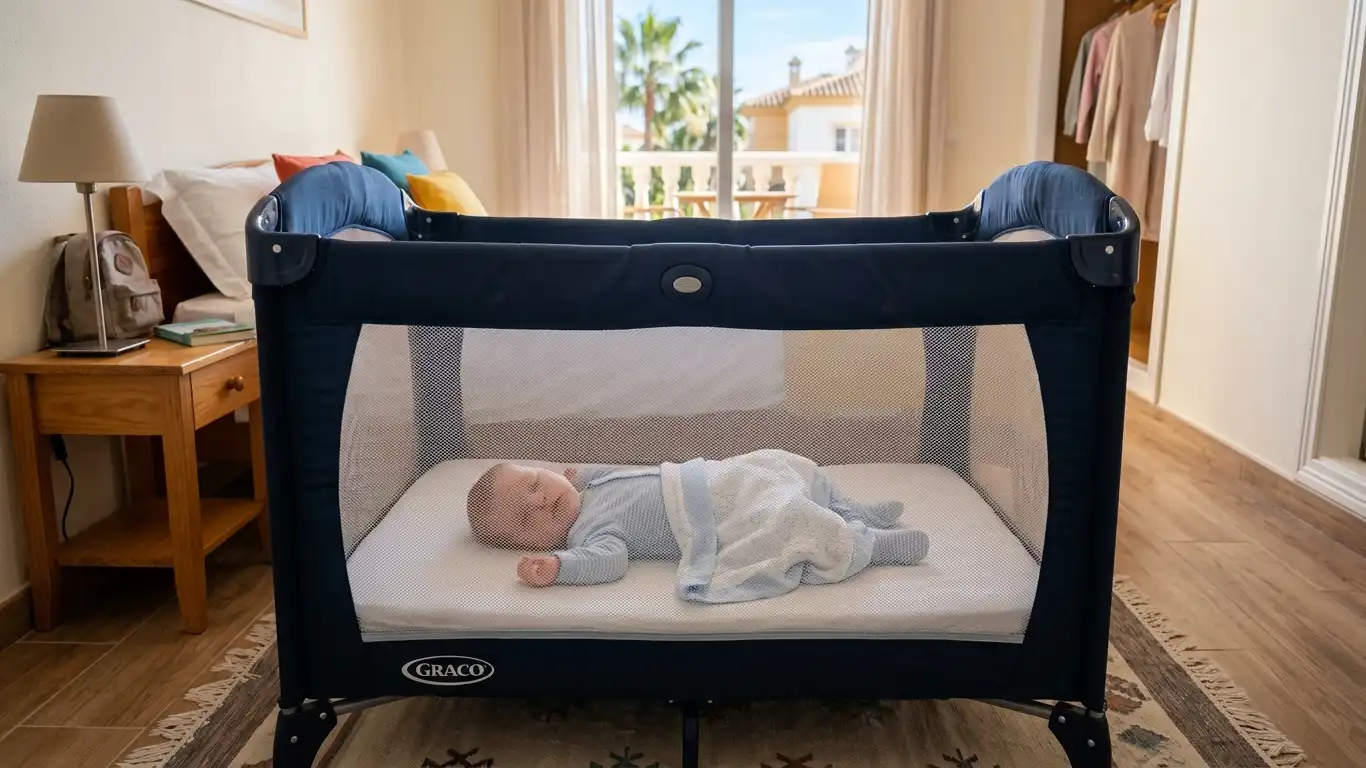
Holidays with a baby can feel like a mix of excitement and slight panic when it comes to sleep — will everyone still be running on fumes by day three?
The good news: baby sleep on holiday doesn’t have to be a write-off. Some disruption is normal, but a few simple steps make a real difference. With a bit of planning, a flexible mindset, and a focus on familiar sleep cues, you can support your baby’s sleep and still enjoy the trip.
First things first — go in with realistic expectations. The environment changes, naps might happen on the go, bedtime may run later, and if you’re crossing time zones, your baby’s body clock will need a few days to catch up. That doesn’t mean sleep goes out the window. It means the goal isn’t perfection — it’s keeping things familiar enough that your baby feels safe, settled and well-rested overall.
What this guide covers
- How much sleep your baby needs, by age, while you’re away
- How to prepare for time zones and pack the sleep essentials
- Safe sleep guidance for hotels, cots and unfamiliar rooms
- Managing jet lag, naps, heat, and the first night away
- Getting back on track once you’re home
How much sleep does my baby need on holiday?
Every baby is different, but having a rough idea of sleep needs helps you plan your days a little better while you’re away. Use this as a guide rather than a rulebook — some babies need a little more, some a little less.
| Age | Total sleep | Naps |
|---|---|---|
| 0–3 months | 14–17 hrs | 4–5 naps |
| 3–6 months | 12–16 hrs | 3 naps |
| 6–9 months | 12–15 hrs | 2–3 naps |
| 9–12 months | 11–14 hrs | 2 naps |
| 12–18 months | 10–13 hrs | 1–2 naps |
Before you go: preparing for better sleep on holiday
A little prep before you leave can make a huge difference once you arrive.
Adjusting for time zones
If you’re travelling somewhere with a significant time difference, it can help to gradually shift your baby’s routine before you go. If that sounds like too much admin before a holiday, don’t worry — you don’t have to do it. But if your baby is sensitive to routine, it can take the edge off.
Travelling east
Move bedtime 15–30 minutes earlier each night for 3–5 days before you travel
Travelling west
Move bedtime 15–30 minutes later each night before you travel
Under 2 hours’ difference
Usually not worth adjusting in advance — just adapt when you arrive
What to pack for better sleep away
Your case may already be full of muslins, snacks and emergency Calpol — but a few sleep items are worth making room for too. The more familiar you can make the sleep environment, the easier it often is for your baby to settle.
Sleep sack in the right tog for the climate
Portable blackout blinds
White noise machine or app
Room thermometer
Fitted cot sheet
A couple of familiar bedtime books
Guidance based on Lullaby Trust safer sleep principles — worth reading even if you feel like you already know it, since travel changes the environment your baby sleeps in.
- Always place baby on their back, on a firm, flat, clear surface
- Target room temperature: 16–20°C — use a thermometer, not guesswork
- No pillows, bumpers or loose bedding in the cot
- Check for hazards on arrival: balcony doors, blind cords, plug sockets
- Never bed-share after alcohol, medication, smoking or extreme tiredness
Tip: ring ahead to confirm the hotel has a cot and what type, and bring your own fitted sheet. If you’re using a hotel or travel cot, check it’s safe and suitable before use, and avoid adding extra padding or a separate mattress unless it’s designed for that cot.
Managing jet lag: east vs west
If you’re travelling long haul, jet lag can throw sleep off for a few days. It’s annoying, yes — but it’s also very normal. Light is the most powerful reset tool, so prioritise outdoor time in the first 48 hours.
Travelling east (e.g. UK → Asia, Australia)
- Get outside in morning light immediately on arrival — this shifts the body clock forward
- Keep daytime naps short (under 45 minutes) to protect night sleep
- Expect roughly 1 day of adjustment per hour of time difference
Travelling west (e.g. UK → USA, Caribbean)
- Expect early waking for the first few days — this is normal
- Offer afternoon and evening light exposure to delay the body clock
- Allow an earlier bedtime on the first 1–2 nights rather than forcing a later one
The first night: keep expectations low
The first night away can be a bit chaotic. Even babies who normally sleep well can be unsettled in a new environment — that doesn’t mean you’ve broken anything.
If the first night is rough
- Keep night-time interactions calm, brief and dark
- Offer extra feeds if needed
- Focus on helping your baby settle, rather than worrying about “bad habits”
- Remember: one disrupted night doesn’t equal a ruined holiday
Naps on holiday: stay flexible, or stick to routine?
This really depends on your baby. Some are happy to nap in the pram, carrier or car and crack on with the day. Others are more sensitive and need their usual sleep space for a decent nap. It’s about knowing your baby and choosing what helps them cope best.
A flexible approach
If your baby naps well on the go, holiday is a good time to lean into that. Use the pram, carrier or car seat when needed and watch their tired signs rather than obsessing over the clock — with a proper shade for the pram or car seat.
A more structured approach
If your baby struggles with naps in busy places or gets overtired easily, it’s worth planning activities around nap times and returning to the room for one or more naps. One thing worth remembering: shorter naps often mean an earlier bedtime is needed, so don’t be afraid to bring bedtime forward after a stop-start day of catnaps.
The portable bedtime routine
The sequence matters more than the setting. Keep it to 20–30 minutes — even a mini version in a hotel bathroom works. A familiar sequence is a sleep signal to your baby’s brain.
- Warm bath
- Massage with familiar lotion
- Into sleep sack and pyjamas
- Dim lights, white noise on
- Feed
- One or two bedtime books
- Into cot, say goodnight
Sleeping safely in the heat
Overheating is a known SIDS risk factor, so keep the room between 16–20°C where possible, and use air conditioning or a fan to circulate air — never pointed directly at your baby.
| Room temperature | What to wear | Tog |
|---|---|---|
| Under 18°C | Vest + babygrow | 2.5 tog |
| 18–20°C | Vest + babygrow | 1.0 tog |
| 20–22°C | Vest only | 1.0 tog |
| 22–24°C | Short-sleeve vest | 0.5 tog |
| Over 24°C | Nappy only | No bag |
A more structured approach
It’s tempting to let a baby carry on sleeping in the car seat once you arrive, especially after a chaotic morning. But babies should not be left to sleep in a car seat outside of the car. If your baby falls asleep in the car, transfer them to a safe, flat sleep space once you arrive if possible.
Coming home: getting sleep back on track
A lot of parents worry that holiday sleep will undo all their hard work. In most cases, it won’t. The key is to go back to your usual routine as soon as you get home.
Best tips for the return home
- Return to your normal bedtime on the first night home
- Bring back your usual sleep cues and routine straight away
- Use daylight strategically if jet lag is still lingering
- Avoid introducing brand new sleep habits during the adjustment period
- Give it up to 2 weeks before deciding anything has permanently changed
Often babies settle back into their normal rhythm faster than parents expect. Your routine worked before — it’ll work again. Consistency and a bit of time are all you need.
You don’t need perfect sleep to have a lovely holiday
There may be a few wonky naps. Bedtime might be later. The first night could be questionable. That doesn’t mean it’s gone wrong — it means you’re away from home with a baby, doing your best and making memories alongside the sleep admin.
Quick checklist
To pack
- Sleep sack (correct tog)
- Blackout blinds
- White noise
- Room thermometer
- Fitted cot sheet
- Bedtime books
On arrival
- Check the cot: firm mattress, no loose bedding, no hazards nearby
- Put up blackout blinds
- Check room temperature
- Set up white noise
- Turn on the monitor
Common questions about baby sleep on holiday

Guest post by Snuggle & Sleep
A baby and toddler sleep consultant supporting families with bedtime struggles, night wakes and unpredictable naps — before, during and after travel.
Use code SNUGGLE10 for 10% off Snoozeshade products, or ACE20 for 20% off 1:1 sleep support.
Visit snuggleandsleep.co.uk to find out more.